
Return Pallets vs Clearance Pallets is an important comparison for anyone buying liquidation inventory in the UK. Both pallet types can provide discounted products for resale, making them popular options for businesses buying liquidation pallets UK, but the stock condition, buying risk, sorting workload and potential profit can be very different.
A return pallet usually contains products sent back by customers. A clearance pallet is more likely to contain excess, discontinued, seasonal or slow-moving stock cleared from a retailer or warehouse.
For resellers, the cheapest pallet is not always the most profitable.
The better choice depends on your experience, storage space, testing ability and where you plan to sell the products.
This guide explains the key differences between return pallets and clearance pallets, how each type works and which inventory may be better for your resale business.
What Are Return Pallets?
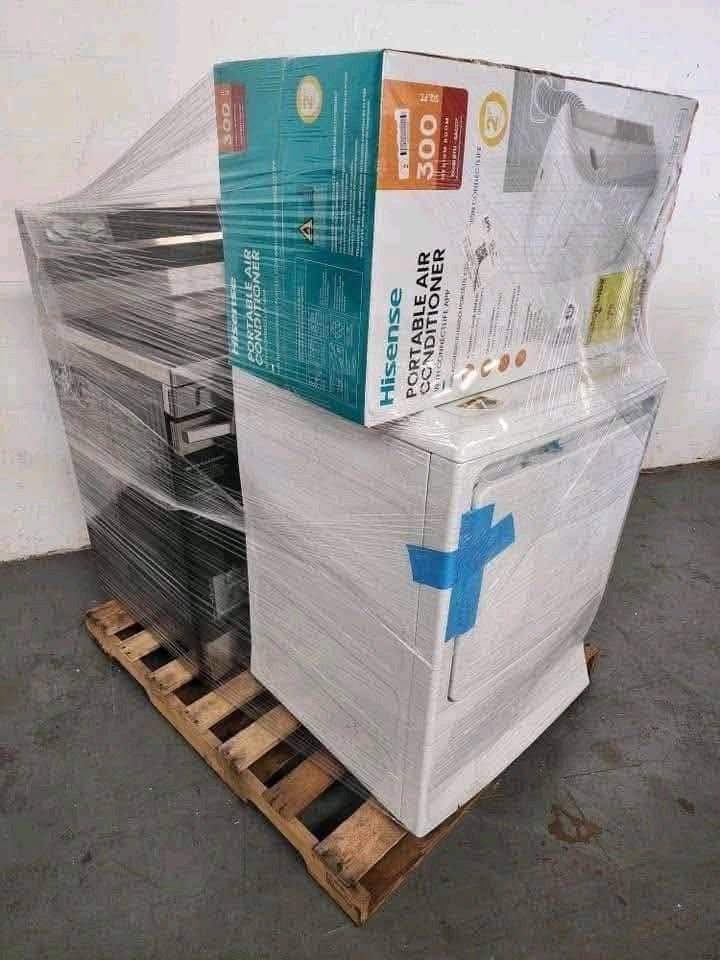
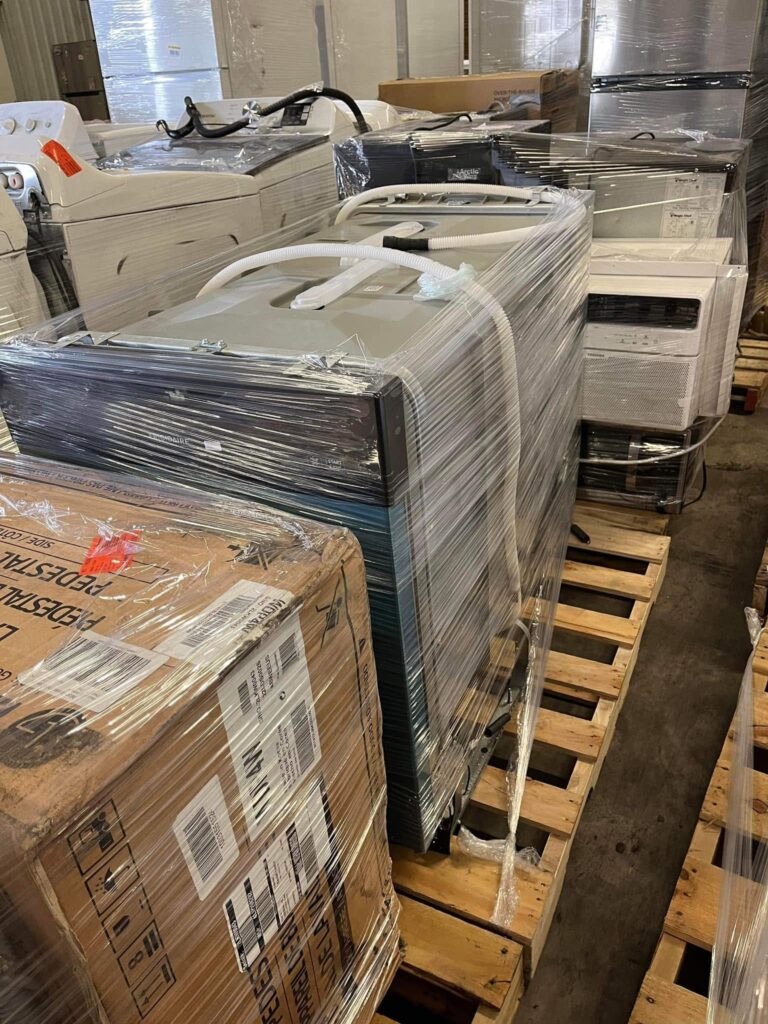
Return pallets are bulk lots containing products that customers have returned to retailers or online sellers. Buyers looking specifically for this type of inventory can explore our Customer Return Pallets UK for available wholesale stock.
Retailers process large volumes of returns. Some products can be placed back into normal retail inventory, while other items may move through reverse logistics, wholesale or liquidation channels.
overstock pallets can contain products returned for many reasons.
A customer may have:
- Ordered the wrong size
- Changed their mind
- Received unwanted gifts
- Opened the packaging
- Reported missing parts
- Found cosmetic damage
- Used the product briefly
- Returned a faulty item
This is why the condition of return stock can vary significantly.
One product may appear almost new. Another may need cleaning, testing or minor repairs. Some products may have missing accessories or damaged retail packaging.
What Can You Find in Return Pallets UK?
Depending on the supplier and pallet category, return pallets UK may contain:
- Electronics
- Small appliances
- Tools
- Toys
- Clothing
- Shoes
- Homeware
- Furniture
- Beauty products
- General merchandise
Electronics remain a popular return-stock category for resellers. Buyers interested in gadgets, small appliances and consumer electronics can also browse our Electronics Pallets UK inventory.
For professional equipment, DIY products and power tools, our Tool Pallets UK category provides additional wholesale inventory options for UK resellers.
The main advantage is the possibility of buying higher retail value products at a reduced wholesale cost.
The main disadvantage is uncertainty.
What Are Clearance Pallets?
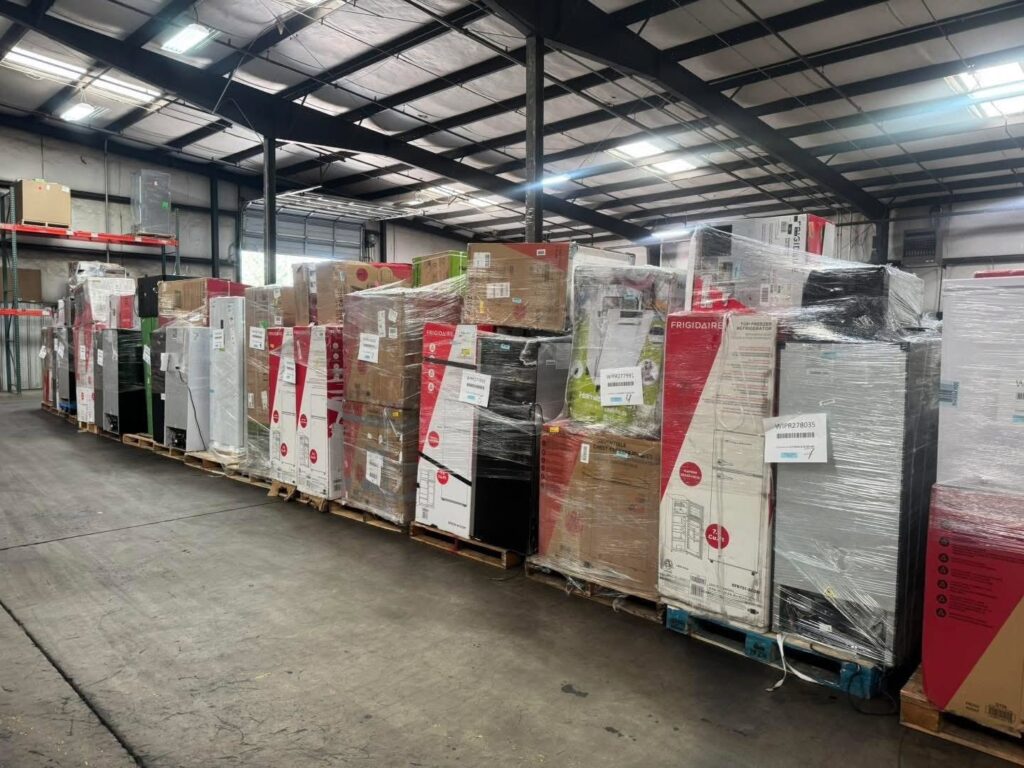
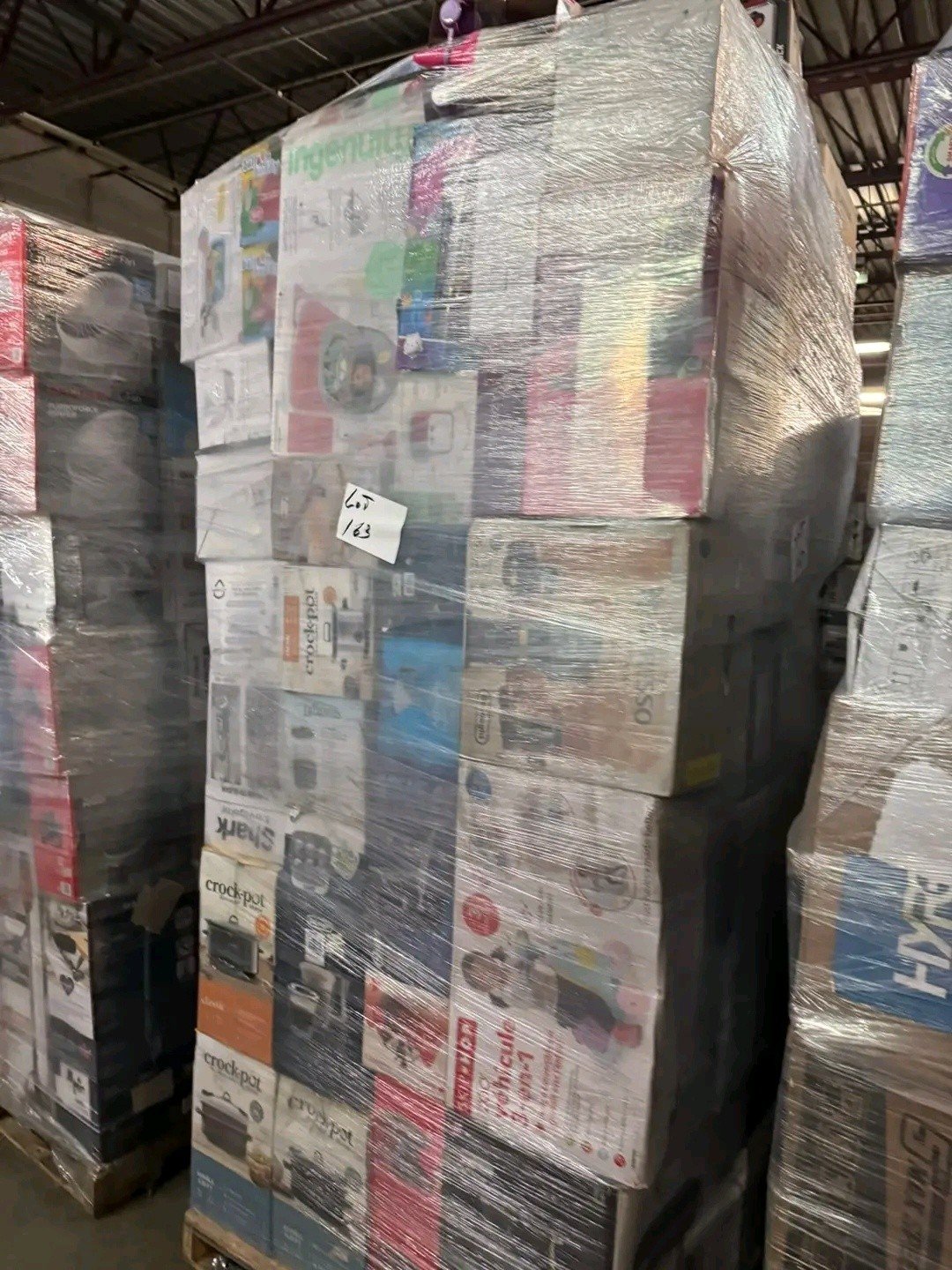
Clearance pallets contain products removed from normal retail inventory for commercial or operational reasons.
The products have not necessarily been returned by customers.
Retailers regularly need to clear warehouse and shop space. Old inventory can take up valuable storage capacity and tie up working capital.
As a result, products may be sold as wholesale clearance stock. Resellers looking for end-of-line, seasonal and excess retail inventory can explore our Clearance Pallets UK for current wholesale pallet options.
Common reasons include:
- Seasonal changes
- Excess inventory
- Discontinued product lines
- Packaging changes
- Store closures
- Warehouse clearance
- Slow-selling products
- End-of-line stock
- Retail range updates
Many clearance pallets UK contain unused products.
However, buyers should never assume every clearance pallet contains perfect retail stock. Packaging can still be damaged, faded or marked from warehouse handling.
Typical Products in Clearance Stock Pallets
Clearance stock pallets may contain:
- Clothing and footwear
- Toys
- Household products
- Kitchenware
- Seasonal products
- Health and beauty products
- Home accessories
- Small electronics
- Retail merchandise
Health, cosmetics and personal care products can also appear in clearance inventory. Beauty retailers and online sellers can browse our Beauty Pallets UK for more specialised wholesale stock.
Return Pallets vs Clearance Pallets: The Main Differences
Understanding Return Pallets vs Clearance Pallets starts with product history.
Return stock has passed through a customer transaction and has been sent back.
Clearance stock is usually being removed from a retailer’s active inventory.
Here is a simple comparison:
| Factor | Return Pallets | Clearance Pallets |
|---|---|---|
| Product history | Customer returned | Excess or cleared inventory |
| Condition | Mixed | Often more consistent |
| Testing needed | Frequently | Usually less |
| Missing parts risk | Higher | Generally lower |
| Purchase price | Often lower | May cost more |
| Sorting workload | Higher | Usually lower |
| Hidden value potential | High | Moderate |
| Beginner friendly | Moderate | Often better |
| Repair opportunity | Higher | Lower |
| Resale speed | Depends on condition | Often faster |
Neither pallet type is automatically better.
A skilled electronics reseller may make excellent margins from customer returns because they can test and repair products.
A market trader selling clothing or household goods may prefer clearance stock because products can often move into resale inventory faster.
Are Return Pallets More Profitable?
Return pallets can offer strong profit potential, but buyers must understand the relationship between risk and margin.
Imagine buying a mixed electronics return pallet.
The pallet contains:
- 10 small appliances
- 15 electronic accessories
- 5 audio products
- 8 household gadgets
- Several miscellaneous products
After testing the inventory, you discover:
- 60% works correctly
- 15% needs minor cleaning
- 10% needs inexpensive parts
- 15% is unsuitable for normal resale
The profitable reseller does not calculate projected revenue using 100% of the original retail value.
Instead, the buyer estimates a realistic recovery value.
This is one of the most important skills when buying pallets for resale.
Expert Tip: Calculate Recoverable Value
Before purchasing return stock, use this basic calculation:
Expected resale revenue – repairs – selling fees – freight – purchase cost = estimated profit
For example:
Estimated resale revenue: £4,000
Repairs and parts: £250
Marketplace fees: £500
Freight and handling: £200
Pallet purchase cost: £1,500
Estimated profit: £1,550
This is a simplified example, but the principle is important.
Never calculate profit using retail value alone.
Retail value is not cash in your bank account.
Are Clearance Pallets Better for Beginners?
For many new resellers, clearance inventory can be easier to manage.
The reason is simple: processing.
A beginner buying mixed customer returns may need to:
- Unload the pallet.
- Identify every product.
- Check for recalls or safety concerns.
- Inspect product condition.
- Test suitable electrical items.
- Find missing accessories.
- Clean the products.
- Grade the inventory.
- Photograph each item.
- Create accurate listings.
That requires time, knowledge and workspace.
With overstock pallets or clearance inventory, the process can sometimes be more straightforward.
Products may be unused and available in repeated quantities.
For example, a clearance pallet containing 100 similar household products may allow a reseller to create one listing and manage quantity.
This can be much easier than creating 100 separate listings for mixed customer returns.
Manifested Pallets vs Unmanifested Pallets
The comparison between return and clearance stock also involves manifests.
What Are Manifested Pallets?
Manifested pallets include an inventory document that may show information such as:
- Product names
- Quantities
- Model numbers
- Original retail values
- Product categories
Manifest quality varies between suppliers.
A manifest should be treated as a purchasing tool, not a guarantee of final resale revenue.
Products may still have condition issues unless the supplier clearly states otherwise.
What Are Unmanifested Pallets?
Unmanifested pallets are sold without a complete item-by-item inventory list.
These are sometimes called mystery pallets.
Unmanifested stock can offer opportunities, but buyers face greater uncertainty.
Experienced resellers may prefer these loads when they understand the supplier, product category and expected recovery rates.
Beginners should be more cautious.
Which Pallet Type Has the Lowest Risk?
Clearance pallets generally offer more predictable inventory when the supplier provides accurate stock descriptions and condition information.
However, no liquidation purchase is completely risk-free.
Before purchasing liquidation pallets UK, check:
- Supplier identity
- Business contact information
- Pallet condition description
- Manifest availability
- VAT information
- Delivery costs
- Collection options
- Payment terms
- Returns policy
- Product category
- Stock grade
Avoid making a purchase based only on photographs of expensive products.
Ask what the images represent.
Are they photographs of the exact pallet?
Are they sample images?
Is the inventory manifested?
Has the stock been tested?
Clear answers help you assess risk.
Practical Strategy for Buying Return Pallets
Return stock works best when you have a clear processing system.
Step 1: Choose a Category You Understand
Do not buy random products simply because the pallet appears cheap.
If you understand tools, buy tool returns.
If you understand clothing brands, focus on apparel.
Product knowledge helps you identify value faster.
Step 2: Build a Testing Area
Create a dedicated space for inspecting inventory.
You may need:
- Cleaning supplies
- Basic hand tools
- Labels
- Storage containers
- Charging cables
- Packaging materials
- A product photography area
For electrical and other regulated products, use suitable competent testing and safety procedures before resale.
Step 3: Grade Every Product
A simple internal grading system can improve inventory control.
For example:
Grade A: New or near-new condition.
Grade B: Used with minor cosmetic wear.
Grade C: Functional but visibly used.
Repair: Needs work before resale.
Parts: Suitable for components.
Unsellable: Not suitable for resale.
Never hide known defects from customers.
Step 4: Track Real Recovery Rates
After every pallet, record:
- Purchase cost
- Freight cost
- Number of items
- Sellable units
- Repairable units
- Unsellable units
- Total revenue
- Marketplace fees
- Net profit
After five or ten pallets, you will have your own performance data.
That information is more useful than general profit claims online.
Practical Strategy for Buying Clearance Pallets
Clearance inventory requires a different approach.
Research Demand Before Buying
A product can be brand new and still be difficult to sell.
Before purchasing 500 units of one item, check:
- Current selling prices
- Completed sales where available
- Number of competing sellers
- Seasonal demand
- Storage requirements
- Delivery costs
- Likely time to sell
The biggest risk with clearance inventory is often not product condition.
It is slow turnover.
Avoid Overvaluing the RRP
A supplier may state that a pallet has a recommended retail value of £10,000.
That does not mean you will receive £10,000.
If the products currently sell for £12 online but originally retailed for £30, your calculation should use the realistic £12 selling price.
Always calculate using current achievable resale prices.
Real-World Reseller Example
Consider two UK resellers with £2,000 inventory budgets.
Reseller A has electronics testing experience and sells on eBay.
Reseller B runs a weekend market stall and sells household products.
Reseller A buys customer return electronics. The stock requires several days of testing, but the reseller can identify faults, source replacement parts and create detailed listings.
For this buyer, return stock may offer stronger margins.
Reseller B buys clearance household goods. Most products require minimal processing and can be displayed immediately at the market.
For this buyer, clearance inventory may provide faster cash flow.
The lesson is simple.
The best pallet should match your resale operation.
Do not copy another reseller’s buying strategy without considering your own skills, customers and sales channels.
Product Safety and Reseller Responsibility in the UK
UK resellers must take product safety seriously.
Businesses that sell or distribute consumer products are responsible for ensuring products are safe and meeting relevant legal requirements.
This is especially important when handling:
- Electrical products
- Children’s products
- Toys
- Cosmetics
- Batteries
- Chargers
- Heating products
- Tools
- Safety equipment
Check product recalls and safety alerts where relevant.
Do not sell products you believe are unsafe.
You should also describe product condition accurately. If an item has a known fault, missing accessory or cosmetic defect, make that information clear to the customer.
Professional reselling is built on repeat customers and trust.
A quick sale is not worth damaging your business reputation.
Return Pallets vs Clearance Pallets: Which Should You Buy?
When comparing Return Pallets vs Clearance Pallets, ask yourself five questions:
- Can I test or repair products?
- How much storage space do I have?
- Where will I sell the inventory?
- How quickly do I need to recover my money?
- How much risk can my business afford?
Choose return pallets if you have product knowledge, testing skills and time to process mixed-condition inventory.
Choose clearance pallets if you prefer more predictable stock, faster processing and products that may be easier to list in quantity.
Some experienced resellers use both.
Clearance products provide steady cash flow while carefully selected return pallets offer higher-risk profit opportunities.
Expert Recommendation for UK Pallet Buyers
Start with the smallest commercially sensible order.
Buying a full truckload before understanding your sell-through rate can create expensive storage and cash-flow problems.
For a new reseller, one well-researched pallet can teach you more than weeks of watching pallet unboxing videos.
Record every cost.
Test every relevant product.
Use realistic selling prices.
Build relationships with reliable wholesale pallets UK suppliers.
Most importantly, learn which categories perform best with your customers.
Successful liquidation reselling is not based on finding one mystery pallet filled with expensive products.
It is based on repeatable buying decisions, accurate inventory control and disciplined resale pricing.
Conclusion: Return Pallets vs Clearance Pallets
The Return Pallets vs Clearance Pallets decision depends on your experience, risk tolerance and resale strategy.
Return pallets can provide excellent profit opportunities for buyers who know how to inspect, test, repair and accurately grade mixed-condition products.
Clearance pallets can offer more predictable inventory and faster processing, making them attractive to beginners, market traders, online shops and established retailers.
Neither option guarantees profit.
Research the stock, calculate realistic recovery value, understand delivery costs and choose inventory that matches your sales channels.
When purchased carefully, both return pallets and clearance pallets can become valuable sources of liquidation stock UK for a growing resale business.
1. What is the difference between return pallets and clearance pallets?
Return pallets contain products returned by customers, while clearance pallets generally contain excess, seasonal, discontinued or slow-moving retail inventory being cleared from stock.
2. Are return pallets better than clearance pallets for beginners?
Clearance pallets may be easier for beginners because the inventory can be more consistent and may require less testing. Return pallets often need more inspection, grading and product knowledge.
3. Can you make money from return pallets UK?
Yes, resellers can generate profit from return pallets, but results depend on purchase cost, product condition, freight, repair expenses, selling fees and achievable resale prices.
4. What are manifested and unmanifested pallets?
Manifested pallets include an inventory list or stock information. Unmanifested pallets are sold without a complete item-by-item list and usually involve greater purchasing uncertainty.
5. Which is more profitable: Return Pallets vs Clearance Pallets?
Neither pallet type is always more profitable. Return pallets may offer higher upside for skilled buyers, while clearance pallets may provide faster processing and more predictable resale opportunities.