
For UK pallet buyers, wholesale tool pallets UK can be an attractive inventory category because the customer base includes tradespeople, DIY buyers, landlords, workshops and small construction businesses. For UK pallet buyers, tools can be an attractive category because the customer base includes tradespeople, DIY buyers, landlords, workshops and small construction businesses. Best Tool Pallets for Resellers
However, buying any pallet labelled “tools” does not guarantee a profit.
Experienced resellers look at the brand mix, condition, battery platform, estimated resale value and likely testing costs before buying. A pallet containing popular cordless drills and impact drivers may offer a very different resale opportunity from a load dominated by low-value accessories or incomplete tools.
This guide explains which tool pallets are worth considering, how to inspect a wholesale load and how UK resellers can build a practical tool resale strategy.
Why Tool Pallets Are Popular With UK Resellers
The UK has a large construction, repair and home improvement market. Official construction data also shows why tool demand cannot be judged only by new house building. Repair and maintenance remains an important part of the sector, creating ongoing demand for equipment used by trades and property owners.
Tools also have one major advantage over many liquidation categories: product utility.
A customer does not buy an impact driver simply because it is fashionable. They buy it because they need to complete a job.
Typical buyers include:
- Builders
- Carpenters
- Electricians
- Plumbers
- Mechanics
- Landscapers
- Property maintenance companies
- DIY enthusiasts
- Workshop owners
This broad customer base can make tool pallets UK inventory easier to market through several sales channels.
Resellers can list higher-value tools individually, create tool bundles or sell lower-cost accessories in bulk.
What Are the Best Tool Pallets for Resellers?
The Best Tool Pallets for Resellers usually contain products with three important characteristics: strong brand recognition, practical demand and enough resale value to justify testing and handling.
From our experience with wholesale inventory, branded cordless power tool loads are normally more attractive than random pallets filled mainly with low-cost hand tools.
The following categories deserve particular attention.
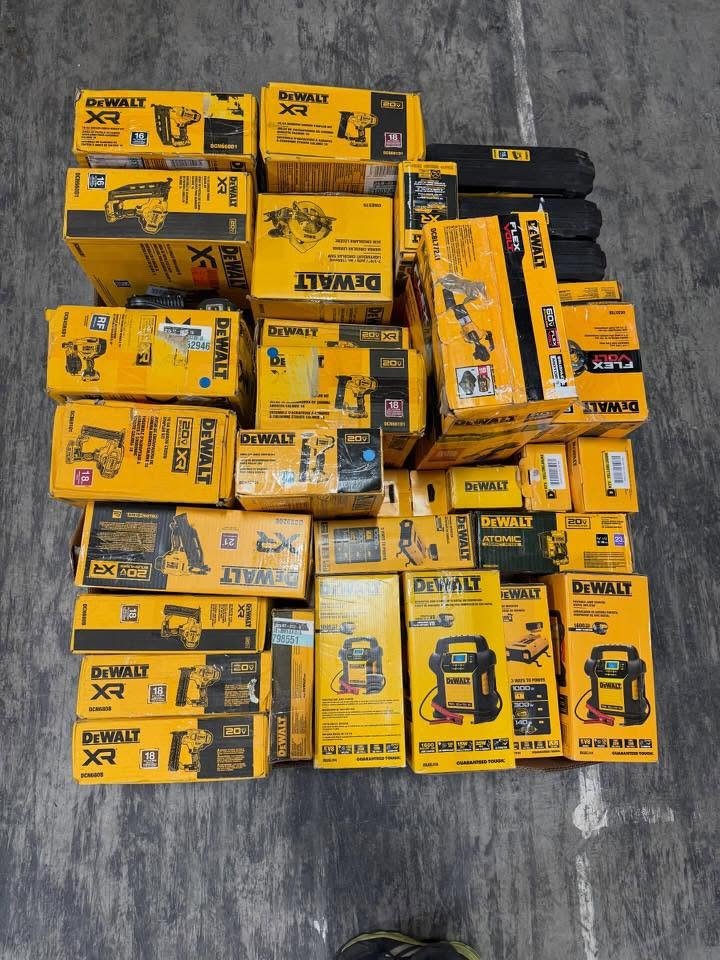
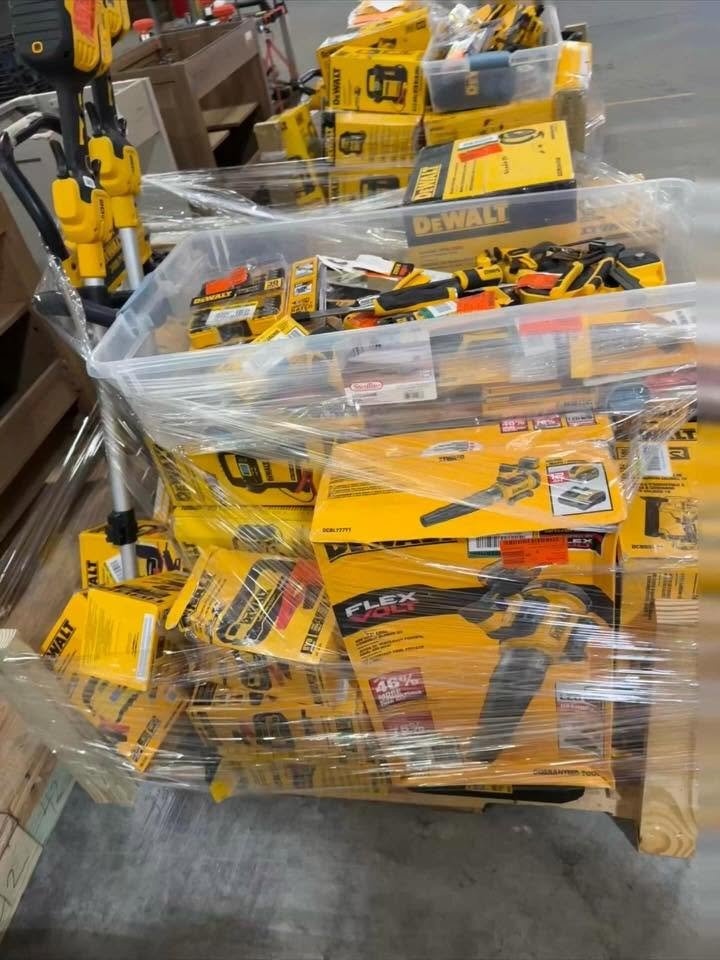
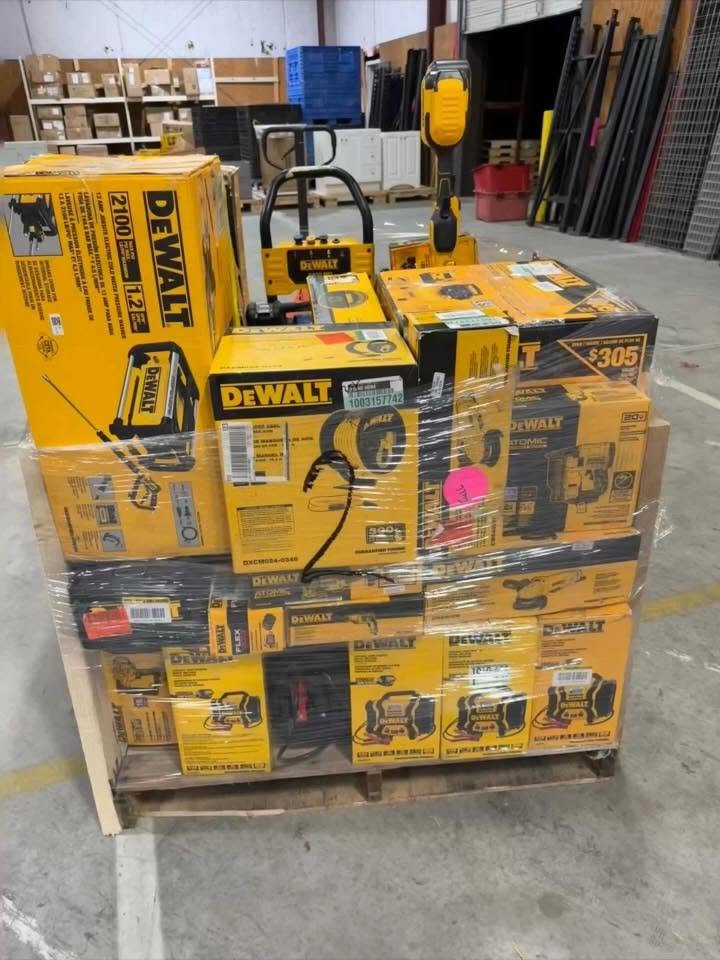
1. DeWalt Tool Pallets
Buyers looking for branded professional tool inventory can explore our DeWalt liquidation pallets UK, which may include cordless tools, saws, grinders, batteries, chargers and workshop accessories depending on current stock.
DeWalt liquidation pallets UK may include:
- Cordless drills
- Impact drivers
- Hammer drills
- Circular saws
- Reciprocating saws
- Angle grinders
- Multi-tools
- Batteries
- Chargers
- Tool storage
The battery ecosystem is particularly important.
When buyers already own compatible cordless tools, they often continue purchasing products within the same battery platform. For a reseller, this can create demand for bare tools, compatible batteries and chargers.
A DeWalt pallet with a balanced mix of tools and power accessories may therefore provide several resale options.
2. Milwaukee Tool Pallets
Resellers interested in professional-grade inventory can also explore our Milwaukee power tools liquidation pallets, which offer mixed tool inventory for contractors, hardware sellers and online resellers.
Typical inventory may include:
- Impact drivers
- Combi drills
- Circular saws
- Reciprocating saws
- Grinders
- Rotary hammers
- Multi-tools
- Work lights
- Batteries and chargers
Milwaukee inventory can appeal to professional users who value cordless tool systems and trade-focused equipment.
For resellers, the key is to separate complete working kits from bare tools and incomplete returns.
Do not automatically bundle everything together.
A tested tool, battery and charger may command a different price from the same tool sold as body-only.
3. Makita Power Tool Pallets
Makita is another familiar name in the UK power tool market.
Makita power tool pallets UK may be attractive because products can appeal to both professional trades and serious DIY users.
Common items include:
- Combi drills
- Impact drivers
- Jigsaws
- Circular saws
- Grinders
- Sanders
- Garden tools
- Batteries
- Chargers
Pay close attention to voltage and battery compatibility when sorting these pallets.
Incorrectly matching batteries, chargers and tools can create customer service problems and inaccurate listings.
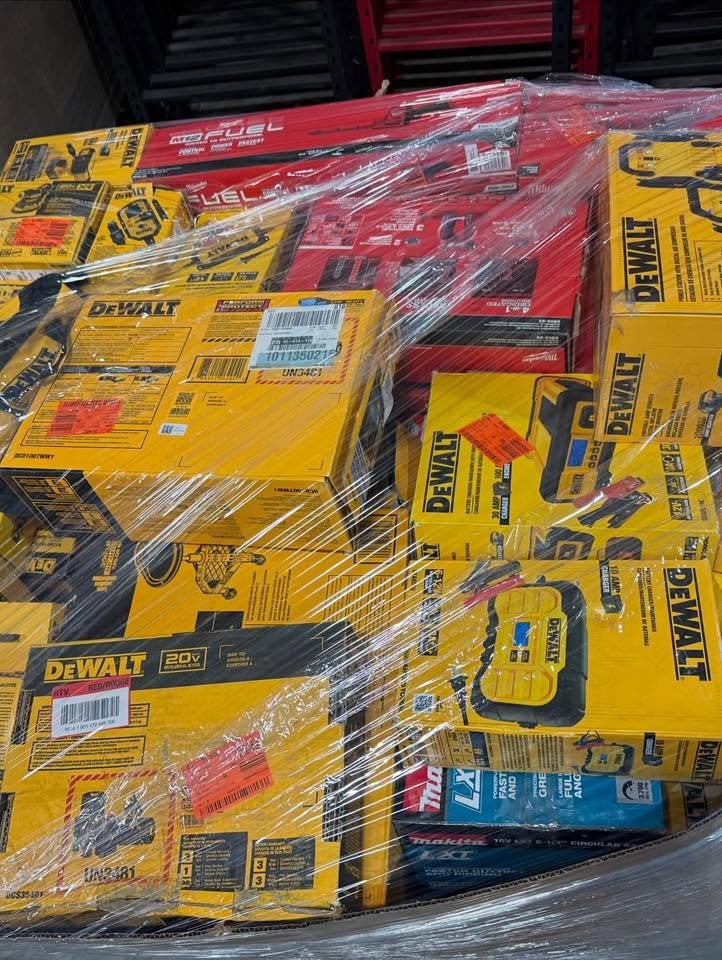
4. Mixed Branded Power Tool Pallets
Mixed pallets can include DeWalt, Milwaukee, Makita and other recognised tool manufacturers. Buyers who want a wider brand and product mix can browse our power tool pallets UK inventory for current wholesale and liquidation options.
These wholesale tool pallets UK loads are often suitable for resellers who want product variety rather than specialising in one brand.
The advantage is market coverage.
One buyer may want a cordless drill. Another may need a saw. A mechanic may be searching for an impact tool, while a homeowner may only need a sander.
The disadvantage is sorting complexity.
You may need several battery systems, chargers and testing procedures.
For this reason, mixed branded pallets are often better suited to resellers with an organised testing area.
5. Hand Tool and Workshop Pallets
Not every profitable pallet needs to contain expensive power tools.
Hand tool and workshop loads may include:
- Spanners
- Socket sets
- Screwdrivers
- Pliers
- Hammers
- Toolboxes
- Measuring tools
- Clamps
- Workshop accessories
Individual resale values may be lower, but these products can be easier to inspect.
A reseller can also create bundles.
For example, instead of listing ten low-value screwdrivers separately, you could build a mixed workshop starter set and sell it as one package.
Branded Tools vs Mixed Tool Liquidation Pallets
Choosing between branded and mixed tool liquidation pallets depends on your business model.
Branded pallets can be easier to market because buyers already recognise the manufacturer.
You can create more focused listings and product categories.
Mixed pallets offer greater variety but require more sorting.
Consider this simple example.
Reseller A purchases a single-brand cordless tool pallet. The reseller sorts inventory by tool type, tests compatible batteries and creates individual listings.
Reseller B purchases mixed liquidation tools UK inventory. The pallet contains several brands, hand tools and accessories. The reseller creates bundles for local sales while listing premium tools individually.
Both strategies can work.
The correct pallet depends on your available storage, technical knowledge and preferred resale channel.
How to Choose the Best Tool Pallets for Resellers
Before purchasing, use a repeatable inspection process.
1. Check the Inventory Condition
Ask whether the pallet contains:
- Overstock
- Shelf pulls
- Customer returns
- Open-box products
- Tested tools
- Untested inventory
- Salvage merchandise
These terms are not interchangeable.
Customer returns can include unused products, but they may also contain incomplete or defective units.
Never price an untested return pallet as though every item is fully working.
2. Review the Manifest When Available
A manifest may provide:
- Product names
- Model numbers
- Quantities
- Estimated retail values
- Inventory condition
Use the manifest as a buying tool, not a profit guarantee.
Retail value is not the same as achievable resale value.
A tool with an original retail price of £200 may sell for much less if it is open-box, missing accessories or heavily available in the secondary market.
3. Calculate Realistic Recovery Value
Professional pallet buyers should calculate a conservative recovery estimate.
Use this basic method:
- Identify the likely resale price of each major item.
- Reduce values for open-box or used condition.
- Allow for defective inventory.
- Subtract marketplace fees.
- Estimate delivery and packaging costs.
- Include testing and cleaning expenses.
For example, imagine a pallet costs £1,500 delivered.
You estimate £4,000 in possible resale revenue.
Do not immediately assume a £2,500 profit.
If selling fees, defective items, replacement accessories and operating costs total £1,000, your actual gross margin is significantly lower.
Good resellers calculate using conservative numbers.
Practical Strategy for Reselling Tool Pallets
Buying inventory is only the first stage.
The resale process determines whether a pallet produces cash flow or sits in storage.
Step 1: Sort Tools by Brand
Create separate areas for:
- DeWalt
- Milwaukee
- Makita
- Other power tools
- Hand tools
- Accessories
This makes testing and listing easier.
Step 2: Separate Battery Platforms
Sort batteries and chargers by:
- Brand
- Voltage
- Battery system
- Capacity
- Physical condition
Never advertise battery compatibility unless you have checked the manufacturer’s specifications.
Step 3: Test Products Safely
Inspect tools for visible damage before testing.
Check:
- Power operation
- Trigger response
- Chuck condition
- Blade or accessory mounting
- Battery connection
- Charging
- Unusual noise
- Excessive vibration
Products with safety concerns should not be sold as fully working equipment.
Step 4: Grade Inventory Honestly
A simple grading system can help:
- Grade A: New or near-new condition
- Grade B: Working with cosmetic wear
- Grade C: Incomplete or requiring repair
- Parts/Salvage: Not suitable for normal resale
Clear condition descriptions build customer trust and reduce disputes.
Step 5: Choose the Correct Sales Channel
Premium tested tools may perform well on online marketplaces.
Bulky equipment can be better for local collection.
Possible channels include:
- eBay UK
- Facebook Marketplace
- Independent websites
- Hardware shops
- Market trading
- Warehouse sales
- Trade customer networks
The visible presence of new, used and refurbished power tools on major UK resale platforms demonstrates that secondary-market tool inventory has established selling channels.
Expert View: Why Testing Creates More Value
One mistake we see new pallet buyers make is trying to sell every item immediately after opening the pallet.
With tool return pallets UK, information creates value.
Consider two identical cordless drills.
The first listing says:
“Customer return. Untested.”
The second says:
“Tested. Motor runs correctly. Chuck inspected. Battery connection checked. Cosmetic marks shown in photographs. Tool body only.”
The second listing gives the buyer more useful information.
That does not mean you should claim a product is perfect or provide guarantees you cannot support.
It means a structured inspection process can reduce uncertainty.
In liquidation resale, reducing buyer uncertainty can improve the quality of your listings and help you price inventory more accurately.
Common Tool Pallet Buying Mistakes
Avoid these costly mistakes:
- Buying based only on estimated retail value
- Ignoring freight and VAT costs
- Assuming all customer returns work
- Mixing batteries and chargers incorrectly
- Failing to check model numbers
- Selling unsafe tools
- Using poor product photographs
- Overpricing incomplete inventory
- Buying more pallets than you can process
Storage is another important factor.
A reseller who can inspect 50 tools per week should think carefully before purchasing several hundred untested units.
Inventory processing capacity matters as much as buying power.
Are Wholesale Power Tools UK Profitable?
Wholesale power tools UK inventory can be profitable when the buying price, condition and resale strategy make sense.
The wider UK tool market continues to be supported by construction, repair, maintenance and DIY demand. Recent official UK construction figures have also shown continuing activity in repair and maintenance, a segment where practical equipment remains essential.
However, there is no fixed profit percentage for a tool pallet.
Profit depends on:
- Purchase cost
- Delivery charges
- VAT treatment
- Product condition
- Brand mix
- Testing costs
- Marketplace fees
- Resale prices
- Inventory turnover
A professional reseller focuses on net recovery, not headline retail value.
Final Tips for Buying Tools Pallets for Sale UK
Before purchasing tools pallets for sale UK, follow these five rules:
- Know the condition grade. Understand whether you’re buying overstock, returns or salvage.
- Research model numbers. Check realistic UK resale prices.
- Budget for defects. Never assume a 100% working rate on raw returns.
- Build a testing process. Accurate condition information improves listings.
- Start within your processing capacity. One well-managed pallet can be better than five pallets sitting unsorted.
For new buyers, a mixed branded pallet can provide useful market data.
Track which brands, tool types and price ranges sell fastest.
Use your own sales records to decide what to buy next.
Conclusion: Choosing the Best Tool Pallets for Resellers
The Best Tool Pallets for Resellers combine recognised brands, practical products, realistic purchase prices and strong secondary-market demand.
DeWalt, Milwaukee, Makita and mixed branded power tool loads can all provide resale opportunities for UK businesses. The important factor is not simply the name printed on the pallet description. Successful buyers inspect condition, calculate realistic recovery values and create an organised testing and sales process.
At Prime Source Pallets, we help UK buyers access wholesale pallet inventory for resale, including professional tools and mixed liquidation stock.
If you’re comparing the Best Tool Pallets for Resellers, start by considering your budget, testing ability, storage space and preferred sales channel. Buy inventory you can process properly, describe accurately and sell confidently.
1. What are the best tool pallets for resellers in the UK?
The best options often include branded power tool pallets containing DeWalt, Milwaukee, Makita and other recognised manufacturers. The right pallet depends on condition, purchase cost and your ability to test the inventory.
2. Are tool liquidation pallets profitable?
Tool liquidation pallets can be profitable, but returns vary. Buyers should calculate realistic resale value after freight, VAT, selling fees, defects, testing and packaging costs.
3. What tools are normally found in wholesale tool pallets?
Pallets may contain cordless drills, impact drivers, saws, grinders, sanders, batteries, chargers, hand tools and workshop accessories. Exact contents depend on the supplier and load type.
4. Should beginners buy manifested or unmanifested tool pallets?
Manifested pallets may be easier for beginners to assess because buyers can review listed inventory before purchasing. Unmanifested pallets carry more uncertainty and require stronger sorting and testing processes.
5. Where can I resell tools from liquidation pallets in the UK?
Common resale channels include eBay UK, Facebook Marketplace, independent online shops, hardware stores, warehouse sales and direct sales to tradespeople. Always describe the product condition accurately and follow marketplace rules.
Return Pallets vs Clearance Pallets