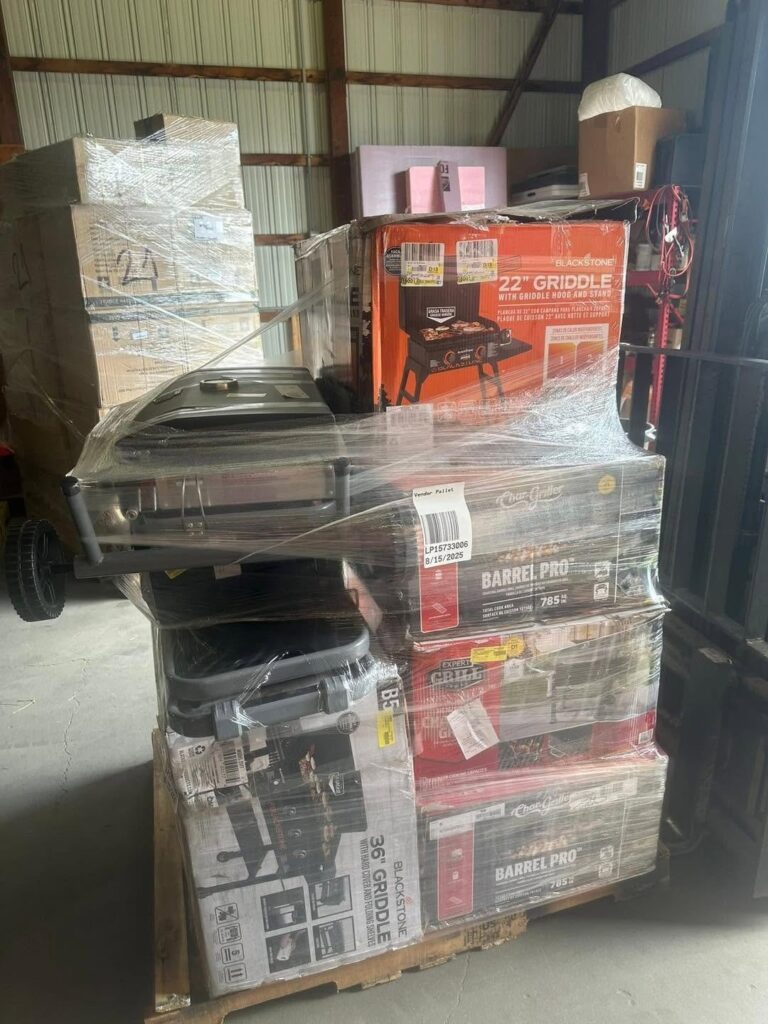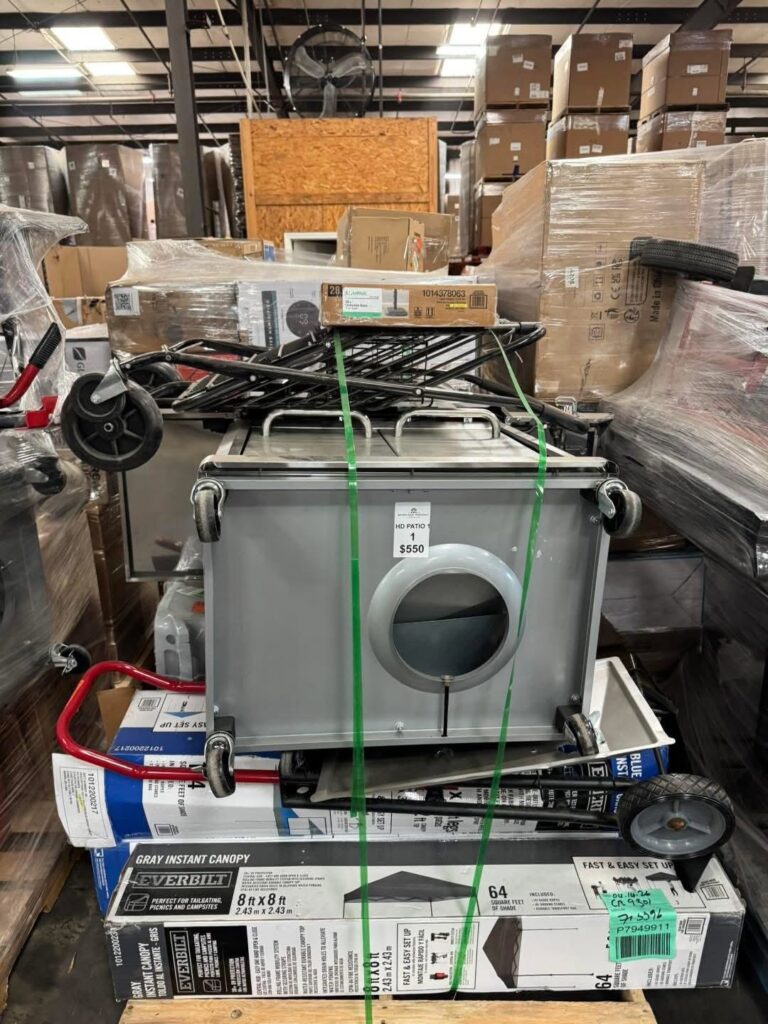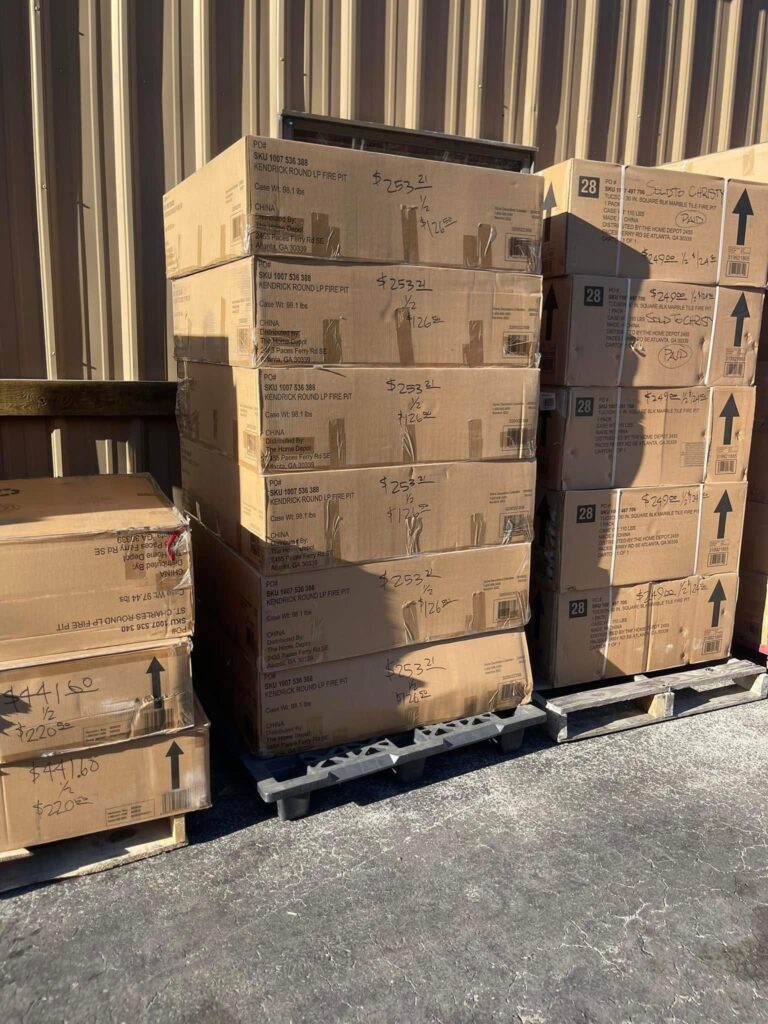

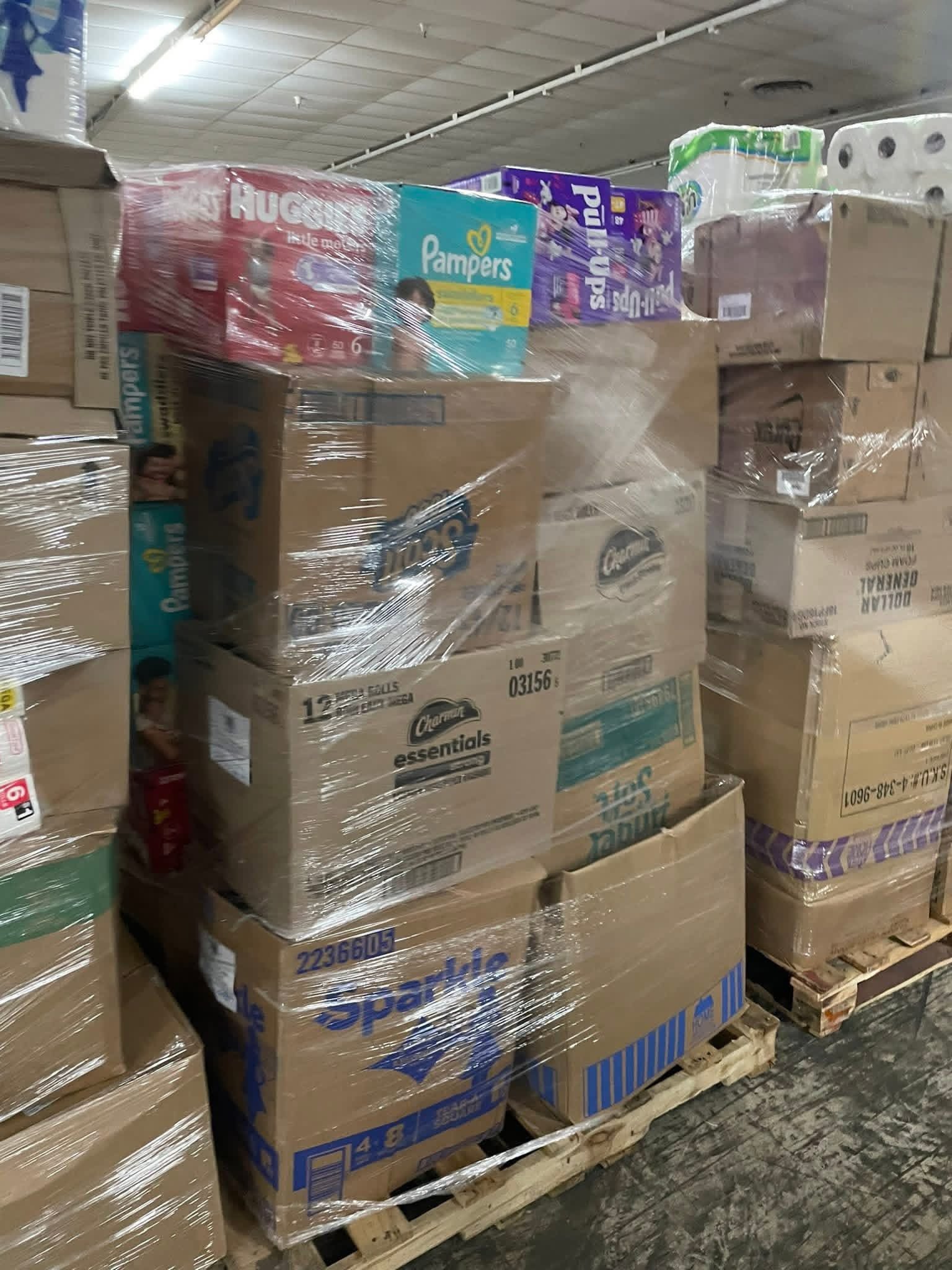
Learning how to start a liquidation pallet business in the UK can open the door to a flexible resale business with several ways to generate income. The basic model is simple: buy liquidation pallets UK inventory containing returned, overstock, clearance, or surplus merchandise, sort the stock, and resell individual products or smaller bundles at a higher combined value.
However, successful pallet reselling is not simply about buying a mystery pallet and hoping to find expensive products.
Experienced resellers treat liquidation stock as inventory. They calculate costs, inspect products, understand selling fees, choose the right marketplaces, and track the actual profit from every pallet.
This guide explains the practical steps required to start a pallet resale business in the UK, from choosing your first stock category to pricing, selling, and scaling your operation.
What Is a Liquidation Pallet Business?
A liquidation pallet business involves purchasing bulk stock that retailers, distributors, warehouses, or liquidation suppliers need to move through secondary wholesale channels.
The inventory may include:
- Customer returns
- Retail overstock
- Shelf pulls
- Clearance merchandise
- End-of-line stock
- Ex-display products
- Open-box goods
- Surplus warehouse inventory
- Mixed-condition products
Instead of purchasing products individually at normal wholesale prices, buyers purchase larger quantities as pallets, cages, lots, or truckload inventory. For resellers interested specifically in returned retail stock, our customer return pallets UK inventory provides access to mixed merchandise sourced through wholesale and liquidation supply channels.
The reseller then sorts and grades the merchandise before selling suitable products individually, in bundles, or as smaller wholesale lots.
For example, a mixed household pallet could contain kitchen accessories, small electrical items, storage products, home décor, and general household merchandise.
A reseller may separate these products by condition and category before listing them through different sales channels.
That sorting process is where much of the value is created.
Is a Liquidation Pallet Business Profitable in the UK?
A pallet resale business UK model can be profitable, but there is no guaranteed return on every pallet.
Your profit depends on four main factors:
- The total landed cost of your stock.
- The condition of the products.
- The realistic resale value.
- How efficiently you sell the inventory.
The biggest mistake new buyers make is comparing the pallet price with the original recommended retail price of every product. Buyers planning to purchase larger quantities can also compare our wholesale pallets UK inventory to find bulk stock across multiple resale categories.
Retail value is not the same as resale value.
If a product originally sold for £100 but similar open-box products currently sell for £45, your calculations should use £45 or less.
Calculate Your True Landed Cost
Before purchasing a pallet, calculate:
Pallet cost + VAT where applicable + buyer fees + delivery + unloading + testing supplies + selling fees = total landed cost
For example:
- Pallet price: £600
- Delivery: £120
- Auction or buyer fees: £90
- Testing and packaging: £40
Your real stock cost is £850 before marketplace fees and other business expenses.
If you only use the £600 purchase price when calculating profit, your figures will be inaccurate.
Expert recommendation: create a simple spreadsheet for every pallet. Record the purchase cost, freight, fees, number of sellable products, sales revenue, refunds, and remaining inventory.
This gives you real profit data instead of estimates. Where to Buy Liquidation Pallets in the UK
How to Start a Liquidation Pallet Business in the UK Step by Step
Understanding how to start a liquidation pallet business in the UK requires a clear buying and resale strategy.
The following process reduces unnecessary risk and helps you build a repeatable business.
1. Choose a Liquidation Product Category
Do not buy random inventory simply because a pallet looks cheap.
Start with products you understand.
Popular categories of liquidation pallets UK buyers often consider include:
- Clothing and apparel
- Shoes and trainers
- Tools and DIY equipment
- Home and kitchen products
- Toys
- Beauty products
- Baby products
- Small appliances
- Electronics
- Furniture
- General merchandise
Your local market should influence your choice.
For example, a reseller with access to tradespeople and local builders may perform well with tool pallets.
A seller experienced with Vinted or fashion marketplaces may prefer clothing and footwear.
Someone with a large van and storage unit may be better positioned to sell furniture or bulky household goods locally.
Start With What You Can Test and Sell
Your first category should meet three conditions:
- You understand the products.
- You know where the buyers are.
- You can inspect or test the stock.
Electronics can have strong resale value, but untested electrical goods require more knowledge and careful handling.
Clothing is easier to inspect, but photographing, measuring, and listing hundreds of individual garments can take considerable time.
There is no single best pallet category for every reseller.
Choose inventory that matches your skills, space, budget, and selling channels. Best Wholesale Pallet Suppliers in the UK
2. Set a Realistic Starting Budget
Never invest your entire business budget into one pallet.
You need working capital for:
- Stock purchases
- Pallet delivery
- Packaging materials
- Storage
- Marketplace fees
- Refunds
- Cleaning supplies
- Product testing
- Replacement stock
A beginner with £2,000 should not automatically spend £2,000 on one load.
For example, you could allocate:
- £900 for inventory
- £250 for delivery and logistics
- £150 for packaging and testing
- £200 for selling expenses
- £500 as working capital
The exact numbers will vary, but the principle is important.
Cash flow keeps a resale business operating.
A pallet may be profitable on paper while taking three months to sell. During that period, you still need money to purchase new inventory and cover expenses.
3. Find Reliable Wholesale Liquidation Pallets UK Suppliers
Supplier research is one of the most important parts of the business.
When looking for wholesale liquidation pallets UK, check whether the supplier provides clear information about:
- Stock condition
- Pallet category
- Manifest availability
- Collection or delivery
- VAT
- Additional buyer fees
- Pallet photographs
- Returns policy
- Business contact information
Be careful with social media sellers advertising unrealistic pallets filled entirely with expensive laptops, smartphones, designer products, or gaming consoles at extremely low prices.
Ask practical questions before sending payment.
For example:
- Is this a customer return, overstock, or mixed-condition load?
- Are the photographs of the actual pallet?
- Is a manifest available?
- Is VAT included in the advertised price?
- Are there buyer premiums or handling charges?
- What is the delivery cost to my postcode?
- Is the pallet sold as-is?
- Can I inspect or collect the stock?
A professional buyer focuses on the condition and purchase terms, not just attractive product photographs.
4. Understand Manifested and Unmanifested Pallets
When you buy liquidation pallets UK, you will often see manifested and unmanifested inventory.
Manifested Pallets
A manifest provides information about the expected stock.
It may include:
- Product names
- Quantities
- SKUs
- Original retail values
- Product categories
A manifest can help you estimate resale potential, but it should still be reviewed carefully.
Check actual sold prices for important products rather than relying only on estimated retail values.
Unmanifested Pallets
Unmanifested pallets do not provide a complete item-level inventory list.
These are sometimes called mystery pallets or mixed return pallets.
They may offer opportunities, but they also create more uncertainty.
For a new reseller, starting with a clear product category or manifested stock can make cost analysis easier.
5. Register and Organise Your UK Resale Business
If you are regularly purchasing stock with the intention of reselling it for profit, treat the activity as a business.
Depending on your circumstances, you may operate as a sole trader or through a limited company.
Keep organised records of:
- Stock purchases
- Supplier invoices
- Delivery costs
- Sales income
- Marketplace fees
- Refunds
- Packaging expenses
- Business mileage where relevant
- Other allowable business expenses
You should also monitor your turnover and understand current VAT registration requirements.
Business and tax rules can change, so use current HMRC and UK Government guidance or speak with a qualified accountant when necessary.
Good records also help you understand which pallet categories actually make money.
6. Learn How to Resell Customer Return Pallets
Understanding How to Resell Customer Return Pallets is one of the most valuable skills in liquidation.
Do not unload a pallet and immediately list every product.
Use a sorting system.
Grade A: New or Excellent Condition
These products may include sealed stock, unused products, or clean open-box merchandise.
Sell these through your highest-value channels.
Grade B: Used or Minor Cosmetic Wear
Products may be fully functional but show signs of handling, damaged packaging, or light cosmetic wear.
Describe the condition accurately and use clear photographs.
Grade C: Repair, Parts, or Heavy Wear
Some products may need repair or may only be suitable for parts.
Bundle these for repair buyers or sell them clearly as spares and repairs where appropriate.
Unsellable or Unsafe Stock
Do not list products that you cannot safely or legally sell.
This is particularly important with electrical goods, baby products, cosmetics, and other product categories where safety requirements may apply.
A simple grading system saves time and helps you price products consistently.
7. Test, Clean and Prepare Customer Return Pallets UK
Customer return pallets UK can contain products in different conditions.
A returned product is not automatically broken.
Customers return merchandise for many reasons, including unwanted purchases, incorrect sizes, damaged packaging, missing accessories, or product faults.
Every product should be checked individually before resale.
Your processing workflow could be:
- Unload the pallet.
- Separate products by category.
- Inspect each item.
- Test products where appropriate.
- Check for missing components.
- Clean suitable items.
- Grade the condition.
- Photograph the product.
- Add a stock number.
- List the item for sale.
For electrical products, use appropriate testing procedures and obtain specialist advice where required.
Never describe an untested product as fully working.
Trust is extremely important in resale.
Accurate descriptions reduce disputes, returns, and negative feedback.
8. Choose the Best Places to Resell Liquidation Stock
The best sales channel depends on the product.
When reselling liquidation stock, use different marketplaces for different inventory categories.
eBay
Useful for:
- Tools
- Electronics
- Collectables
- Branded products
- Replacement parts
- Small appliances
Facebook Marketplace
Suitable for:
- Furniture
- Large appliances
- Home goods
- Local bundles
- Bulky products
Vinted
Often useful for:
- Clothing
- Shoes
- Fashion accessories
Amazon
May be suitable for eligible inventory, but sellers must understand listing restrictions, product condition rules, fees, and documentation requirements.
Your Own Website
A dedicated online store can help build a long-term brand and reduce dependence on a single marketplace.
The strongest resellers often use several sales channels.
For example, you might sell premium tools individually online, move bulky products through local collection, and bundle lower-value stock for market traders.
9. Price Wholesale Pallets for Resale Correctly
Pricing is one of the biggest factors in stock turnover.
Do not price products based only on what you want to earn.
Research the market.
Check:
- Current listings
- Recently sold prices where available
- Product condition
- Delivery costs
- Marketplace fees
- Competitor pricing
If similar used products regularly sell for £35, listing yours for £70 because the original retail price was £100 may result in slow sales.
Fast stock turnover is often more valuable than chasing the maximum possible price.
An experienced reseller may accept £30 today rather than hold a product for six months hoping to receive £45.
Warehouse space also has a cost.
10. Track Profit From Every Pallet
Create a separate profit record for each pallet.
Track:
- Pallet reference
- Purchase price
- Delivery cost
- Total units
- Sellable units
- Damaged units
- Revenue
- Marketplace fees
- Refunds
- Net profit
After several purchases, patterns will become clear.
You may discover that tool pallets produce higher profit but take longer to process.
Clothing pallets may have a lower average sale price but provide faster stock turnover.
This information should guide your future buying decisions.
Real-World Example: Building a Pallet Resale Business UK Strategy
Imagine a reseller purchases a mixed home and small appliance pallet.
The total landed cost is £1,000.
After sorting the load, the reseller identifies:
- 25 higher-value products
- 60 standard resale products
- 30 low-value products
- 10 damaged or incomplete products
Instead of selling everything through one marketplace, the reseller uses a mixed strategy.
Higher-value products are tested and listed individually.
Standard products are sold through local and online marketplaces.
Low-value products are bundled into discounted packages.
Damaged products are separated and only sold for parts where suitable.
This approach creates several income streams from one pallet.
The lesson is simple: pallet profit often comes from how inventory is processed, not from finding one expensive product.
Common Mistakes New Liquidation Pallet Resellers Make
Avoid these common errors:
- Buying from an unverified supplier
- Spending the entire budget on one pallet
- Ignoring VAT, fees, and freight costs
- Using original retail value to calculate profit
- Selling untested products as working
- Buying bulky stock without storage space
- Listing products with poor photographs
- Failing to track individual pallet performance
- Buying categories you do not understand
- Scaling before developing a processing system
Liquidation stock is a real inventory business.
The more organised your buying, sorting, testing, and selling process becomes, the easier it is to scale.
How to Scale a Liquidation Pallet Business in the UK
Once you understand how to start a liquidation pallet business in the UK, scaling should be based on proven sales data.
Do not jump from one pallet to a truckload simply because your first pallet sold well.
First identify:
- Your best-performing category
- Average pallet profit
- Average sell-through time
- Storage requirements
- Return rate
- Best sales channel
Then reinvest carefully.
A practical growth path may look like this:
One pallet → two or three pallets → regular monthly stock → dedicated storage → larger wholesale orders
Create repeatable systems before increasing inventory.
Use stock labels.
Create standard testing procedures.
Set photography areas.
Use listing templates.
Track product locations.
The goal is to process more inventory without losing control of your stock.
Expert Recommendation for New UK Pallet Resellers
Start with a product category you already understand and a pallet size you can afford to learn from.
Your first pallet is not only inventory.
It is market research.
Track how long products take to sell, which price points perform best, how many items need testing, and which products generate customer complaints.
Use that information when selecting your next load.
The resellers who build sustainable businesses are usually not the buyers chasing the biggest mystery pallet.
They are the buyers who understand their numbers and repeatedly purchase stock that works for their customers.
Conclusion: How to Start a Liquidation Pallet Business in the UK
Understanding how to start a liquidation pallet business in the UK begins with choosing the right stock, calculating your true costs, working with dependable suppliers, and building an organised resale process.
Start small.
Learn how to inspect and grade customer returns.
Use realistic resale prices.
Track every expense.
Sell products through the channels where customers are already looking for them.
As your experience grows, reinvest profits into proven inventory categories and increase your purchasing volume carefully.
A successful liquidation pallet business is built through consistent buying decisions, accurate product descriptions, good customer service, and disciplined stock management.
If you are ready to start reselling, explore our available liquidation pallets UK, customer return stock, wholesale pallets, and bulk inventory options to find products suitable for your resale business.
1. How much money do I need to start a liquidation pallet business in the UK?
The required budget depends on the pallet category, delivery cost, and stock quantity. Beginners should budget for the pallet, freight, packaging, testing, selling fees, and additional working capital rather than spending everything on inventory.
2. Are liquidation pallets profitable in the UK?
Liquidation pallets can be profitable when stock is purchased at the right price and processed efficiently. Profit depends on product condition, total landed cost, selling fees, resale value, and stock turnover.
3. Where can I sell customer return pallets and products?
Resellers may use eBay, Facebook Marketplace, Vinted, eligible Amazon listings, their own website, local markets, retail shops, and wholesale resale channels depending on the product category.
4. How do I resell customer return pallets safely?
Inspect, test, clean, and grade products before listing them. Describe the condition accurately and do not sell unsafe products. Certain categories may have specific product safety requirements.
5. Should beginners buy manifested or unmanifested pallets?
Manifested or clearly categorised pallets are often easier for beginners to analyse. Unmanifested pallets may offer opportunities but involve greater uncertainty because the exact inventory is not fully listed.