

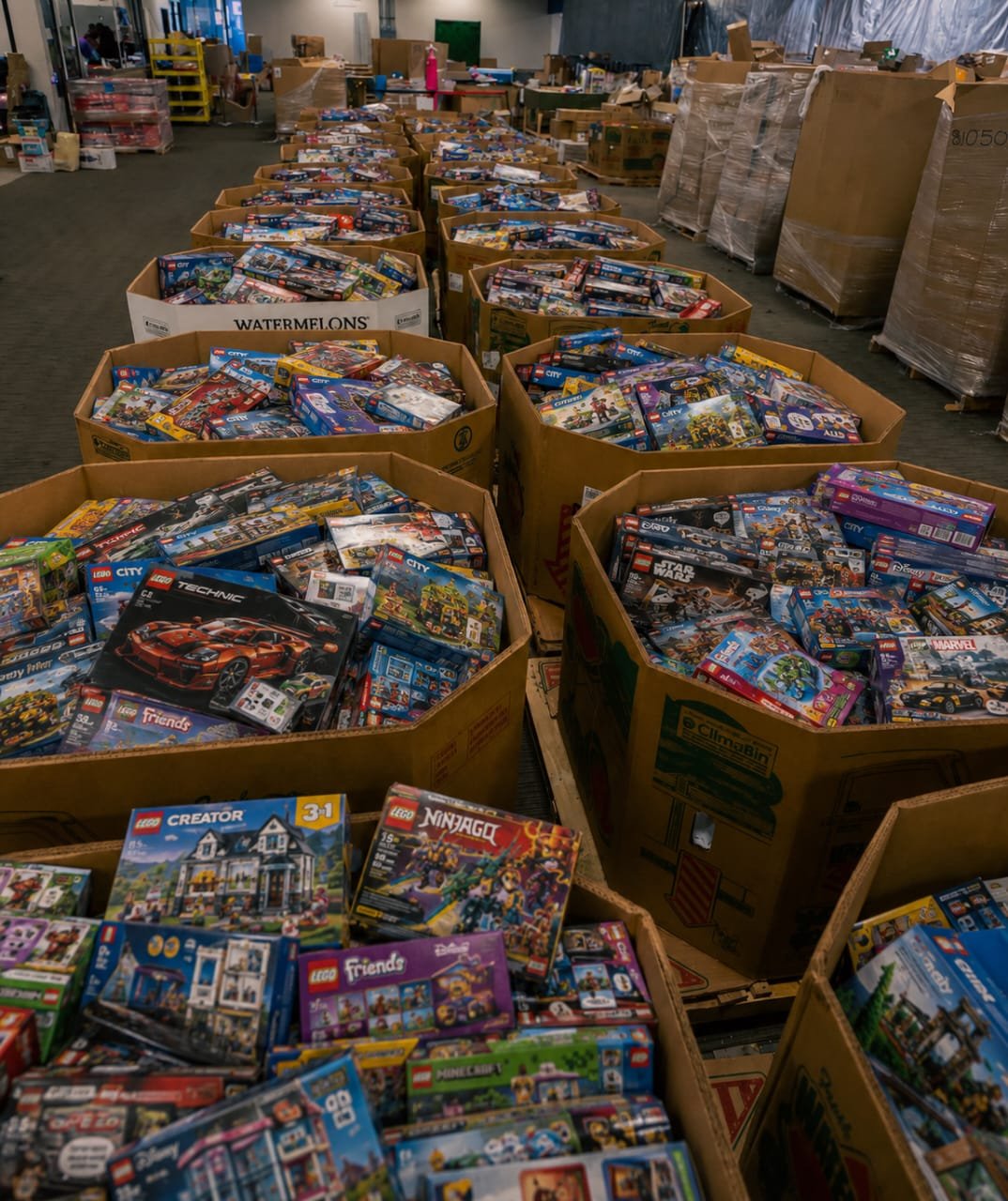
Toy pallets vs Amazon return pallets — it’s the first real decision every new UK reseller faces, and most get it wrong by choosing on price alone. The cheaper pallet isn’t automatically the profitable one. What matters is what percentage of the pallet you can actually sell, how fast it moves, and how many hours you spend getting there.
We supply both categories to resellers across the UK every week, so we’ve watched this experiment run hundreds of times. Here’s the honest, numbers-first comparison — no hype for either side, because the right answer genuinely depends on how you like to work.
What You’re Actually Buying
Before comparing margins, be clear on what each pallet type is:
- Toy pallets are single-category consignments: toys, games and children’s items, usually from retailer overstock, shelf-pulls and customer returns. Stock is graded, so you know the rough ratio of new to returned items before buying.
- Amazon return pallets are mixed-category lots of customer returns — toys, electronics, homeware, clothing, tools, all in one pallet. Usually unmanifested: you find out what’s inside when you open the boxes.
That single difference — known category vs mystery mix — drives almost every other difference in this comparison.
Head-to-Head: The Numbers That Matter
Strip away the sales pitch and the toy pallets vs Amazon return pallets comparison comes down to five numbers:
| Factor | Toy Pallets | Amazon Return Pallets |
|---|
| Typical UK pallet cost | £500–£900 | £300–£700 |
| Saleable rate | 75–90% of items | 50–70% of items |
| Typical net margin | 30–50% | 20–60% (much wider swing) |
| Testing/processing time | Low — minimal checks | High — electronics need testing |
| Sell-through speed | Fast (branded demand) | Mixed (some instant, some dead stock) |
| Predictability | High | Low |
The pattern: toy pallets trade a slightly higher buy-in for a much higher saleable rate and far less processing time. Amazon returns offer a cheaper entry and the occasional jackpot item — but with a wider swing between a great pallet and a bad one.
The Case for Toy Pallets
Toy pallets win on consistency, and consistency is what turns reselling from a gamble into a business:
- Branded demand does your marketing. Parents search for LEGO, Barbie and Paw Patrol by name — your listings get found without ad spend.
- Condition tolerance is high. An opened toy with its pieces intact still sells well. A faulty gadget doesn’t.
- Almost everything sells. With a 75–90% saleable rate, nearly your whole buy-in comes back as revenue.
- Q4 multiplies everything. Toys are the single most seasonal-proof category — demand spikes hard every Christmas, every year. The British Toy & Hobby Association tracks this annual cycle, and it has never missed.
- Storage is simple. One category means one shelving system, one packaging size, one workflow. Mixed returns stock needs sorting space for everything from kettles to coats.
Graded toy pallets UK stock also means you can calculate your expected return before you buy — try doing that with a mystery pallet.
The Case for Amazon Return Pallets
Amazon return pallets win on entry cost and upside:
- Cheaper per pallet. A £400 returns pallet can contain £1,500+ of retail value.
- Jackpot potential. One working high-value item — a hoover, a console accessory, a coffee machine — can repay half the pallet alone.
- Endless variety. If you sell across several marketplaces and niches, mixed stock feeds them all at once.
- Manifests reduce the mystery. Some suppliers offer manifested or semi-manifested return lots — a rough contents list that removes the worst of the guesswork. Always ask before buying; a manifest is worth a small premium.
The costs are hidden in the work: untested electronics, missing parts, broken items destined for the tip, and a 25–50% write-off rate you must price into your maths. If you’re new to the category, read what customer return pallets actually are before buying — understanding how returns get graded saves expensive surprises.
Worked Example: £600 in Each
Averages only go so far, so let’s run the toy pallets vs Amazon return pallets test with real money — the same £600 budget in each model:
Toy pallet at £600: 85% saleable → around £850–£950 gross sales → roughly £750–£850 net after fees → £150–£250 profit, with maybe 4–6 hours of processing.
Amazon return pallet at £600: 60% saleable → around £700–£1,100 gross depending on the mix → roughly £550–£950 net → anywhere from a £50 loss to £350 profit, with 10–15 hours of testing, cleaning and listing.
Neither is “better” — they’re different risk profiles. The toy pallet pays a smaller, steadier wage. The returns pallet is a swing trade.
Which Should YOU Buy?
The toy pallets vs Amazon return pallets decision should be driven by how you work, not by the headline price:
Choose toy pallets if you:
- Want predictable, repeatable margins
- Prefer listing over testing and repairing
- Have limited processing time each week
- Are building towards Christmas stock
Choose Amazon return pallets if you:
- Enjoy testing and fixing, or can price repairs into your model
- Sell across several niches and marketplaces already
- Have storage space for slow-moving odd items
- Can absorb an occasional break-even pallet without stress
Many established resellers run both: toy pallets as the reliable baseline, returns pallets as the upside play. Our wholesale toy pallets range works well as that baseline, with Amazon pallets UK or Amazon bulk liquidation pallets alongside when you want the swings.
The Hidden Costs Both Sides Forget
Whichever side you pick in the toy pallets vs Amazon return pallets decision, the margin you calculated isn’t the margin you’ll keep until you account for:
- Postage and packaging. Toys are light but bulky; returns items are often heavy. Work out courier costs per item before pricing, not after.
- Marketplace fees. Between 0% (Vinted, Facebook) and around 15% (Amazon), the same item can earn you £3 more just by choosing a different channel — our guide on how to resell liquidation toys in the UK compares the four main channels in detail.
- Returns from your own buyers. Budget 3–5% of sales coming back to you, especially on untested electronics from returns pallets.
- Your time. Ten hours of processing at £15/hour is £150 of invisible cost. On a £600 pallet, that’s the difference between a good week and a bad one.
The Bottom Line
Toy pallets vs Amazon return pallets isn’t a contest with one winner — it’s a question of which risk profile fits your week. Toys give you 75–90% saleable stock, fast sell-through and predictable 30–50% margins. Amazon returns give you a cheaper buy-in, bigger possible wins, and more hours per pound earned. Start with the one that matches your available time, then add the other once your system is proven.
Whichever route you take, buy graded stock from a supplier who tells you what’s inside. Browse current toy pallets UK and Amazon return pallets UK stock, or contact our trade desk — tell us how many hours a week you have, and we’ll tell you honestly which pallet fits. For more on the returns side, read our honest breakdown: are Amazon return pallets worth buying?
FAQs: Toy Pallets vs Amazon Return Pallets
Are toy pallets more profitable than Amazon return pallets?
Toy pallets are more consistently profitable: expect 30–50% net margins with 75–90% of items saleable. Amazon return pallets can occasionally beat that with a lucky high-value item, but the range is far wider — from a small loss to 60% profit — because the stock is untested and mixed.
What percentage of an Amazon return pallet is usually sellable?
Typically 50–70% of items in an Amazon return pallet are resaleable after testing and cleaning. The rest is damaged, incomplete or faulty stock you must write off — always price that waste into your buying decision.
Why are toy pallets easier for beginners?
Three reasons: the stock is graded so you know what you’re buying, toys rarely need testing or repair, and branded toys sell themselves through search demand. Beginners can learn pricing and listing without also learning electronics testing.
Can I resell both toy pallets and Amazon returns together?
Yes — many established UK resellers do exactly that. Toy pallets provide the reliable monthly baseline income, while returns pallets add occasional high-margin wins. Start with one category, prove your process, then add the second.
How much should I spend on my first pallet?
Keep your first pallet under £500 whichever type you choose. The goal of pallet one is learning your real processing speed and sell-through rate — profit matters less than the lesson. Scale up only after your first pallet has sold through.


[…] category well (tech, tools, toys): a category pallet — electronics, toy pallets UK or tools. See toy pallets vs Amazon return pallets for that specific […]