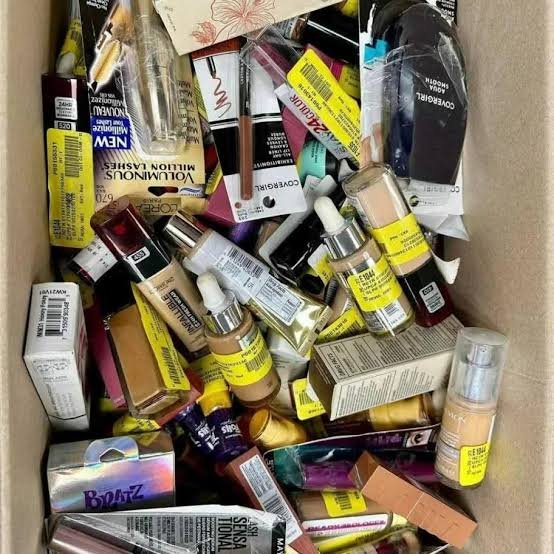

Buying liquidation cosmetics is one of the fastest ways to stock a resale business in the UK, but the profit only counts if the products are still safe and legal to sell. Before you list a single item, you need to know how to check expiry dates on liquidation cosmetics properly — because unlike food, cosmetics use three different markings, and the one you are looking for is not always an obvious date.
This guide walks you through every marking you will find on UK cosmetic packaging, exactly where to look for it, a six-step checking routine you can apply to a whole pallet, and what to do with stock that is short-dated or past its best. If you are still deciding whether this category suits you, read our honest breakdown of are beauty liquidation pallets worth buying first, then come back here before your first pallet arrives.
Why Expiry Checks Matter More on Liquidation Stock
Liquidation cosmetics come from three main streams: overstock, shelf pulls, and customer returns. Each stream carries a different date profile:
- Overstock is usually the freshest. Retailers ordered too much or discontinued a line, so items often have 12–24 months of life left.
- Shelf pulls were removed to make room for new seasons. Dates vary widely — some items are close to their best-before date, which is exactly why they were pulled.
- Customer returns are the riskiest. Seals may be broken, and once a product is opened, the Period After Opening clock starts ticking regardless of the printed date.
When you buy a mixed cosmetics pallet with around 500 items, you cannot assume uniform freshness. A five-minute checking routine per box protects your seller account, your customers, and your margins.
The Three Date Markings on UK Cosmetic Packaging
UK law gives manufacturers two ways to show durability, plus a traceability code. To check expiry dates on liquidation cosmetics accurately, you need to recognise all three.
1. Best Before End (BBE) date. Required on any product with a shelf life of 30 months or less. It appears as the words “Best used before the end of” or an hourglass/egg-timer symbol, followed by a month and year (for example, 03/2026). After this date the product may no longer be safe or effective — treat it as unsellable.
2. Period After Opening (PAO) symbol. Products lasting longer than 30 months skip the BBE date and instead show an open-jar symbol with a number and the letter M — 6M, 12M, 24M. That is how long the product stays safe after first opening. An unopened 12M product from a 2024 batch is still perfectly sellable in 2026; the same product with a broken seal is a gamble.
3. Batch code. A short printed or embossed code (letters and numbers) with no date format at all. It identifies the production run for recalls — and you can decode most major brands with free online batch-code checkers to find the manufacture date. This is your best friend when a pallet contains unsealed items with no visible date.
Where to Find the Date: Product-by-Product Cheat Sheet
| Product type | Where the date/symbol usually sits | Typical marking |
|---|
| Mascara and liquid liner | Crimped end of the tube or printed on the barrel | PAO 6M — the strictest in cosmetics |
| Foundation and concealer | Bottom of the bottle or on the box base | BBE date or PAO 12M |
| Lipstick and lip gloss | Bottom of the tube, often a batch code only | Batch code + PAO 12–24M |
| Skincare creams and serums | Bottom of the jar or back of the tube | PAO 12M, sometimes BBE |
| Shampoo and shower gel | Back label near the ingredients list | PAO 12–24M |
| Powder products (eyeshadow, blush) | Underside of the compact | PAO 24–30M; very stable |
| Perfume and aerosols | Base of the bottle or can | Often exempt — no date required |
| Nail polish | Bottom of the bottle, batch code | PAO 24–36M |
Single-use sachets, sealed aerosols, and products that cannot deteriorate (like some pure powders) are exempt from date marking altogether — do not reject stock simply because you cannot find a date on these. Knowing where each marking hides is half the battle when you check expiry dates on liquidation cosmetics at pallet scale.
How to Check Expiry Dates on Liquidation Cosmetics: The 6-Step Routine
When your delivery arrives — every pallet from us ships on a tail-lift with UK-wide delivery, quoted to your postcode — work through this routine before anything goes near a listing:
- Split by seal. Sealed items in one pile, broken or missing seals in another. Broken-seal liquids, mascaras, and skincare go straight to the “personal use or bin” pile — never resell them.
- Photograph the markings. Take a quick photo of each product’s base or crimp. You will need these for listings, and it builds a record if a buyer ever questions authenticity.
- Read the BBE date first. Anything past its hourglass date is unsellable, full stop. Anything within three months goes in a “sell fast, price low” pile.
- Log the PAO on sealed stock. Note the open-jar rating in your spreadsheet — buyers ask, and “sealed, 12M PAO” is a selling point.
- Decode batch codes. For undated items, run the batch code through a free checker. Manufacture date plus the PAO rating tells you the real freshness.
- Grade and price. Grade A (12+ months or sealed long-PAO), Grade B (6–12 months), Grade C (under 6 months — bundle or discount). Our health and beauty liquidation pallets typically arrive as unmanifested mixed lots, so this grading step is where your profit margin is actually made.
What UK Law Actually Requires
Under the UK’s cosmetics regulations, any product with a minimum durability of 30 months or less must carry a best-before date, and longer-lasting products must carry the open-jar PAO symbol — on both the container and the outer packaging. Distributors are legally expected to act with due care, which includes not selling products past their durability date. You can read the full requirements in the official government guidance on cosmetic product labelling.
The practical takeaway for resellers: when you check expiry dates on liquidation cosmetics, you are not just protecting buyers — you are meeting the same due-care standard the law expects of any distributor. Selling an out-of-date cosmetic is not a grey area. Trading Standards can act on it, marketplaces will suspend you for it, and no profit margin is worth either. If you are building this into a proper operation, our guide on how to start a liquidation pallet business in the UK covers the compliance basics alongside sourcing and pricing.
What to Do With Short-Dated and Expired Stock
Short-dated does not mean worthless — it means repriced:
- Bundle aggressively. Three short-dated items at 40% off move faster than one at 20% off.
- Sell through fast channels. Market stalls, car boots, and clearance bundles turn stock in days.
- Be transparent. Listing “BBE 02/2026 — priced to clear” converts bargain hunters and protects your feedback score.
- Bin the genuinely expired. Skincare and mascara past date are a liability, not inventory.
Where to Sell Once Your Stock Is Checked
Dates verified, stock graded — now choose your channel. Each marketplace treats cosmetics differently, from eBay’s sealed-product rules to Vinted’s restrictions, and the wrong choice gets listings removed. We break down every channel, fee, and rule in our guide on where to sell liquidation cosmetics in the UK. For the bigger picture on sourcing, our wholesale beauty pallets UK guide covers grading, pricing, and suppliers, and the where to buy liquidation pallets in the UK guide compares every sourcing route open to you.
Ready to put this routine to work? We deliver UK-wide on tail-lift vehicles — from London and Manchester to every postcode in between. Browse our live wholesale health and beauty pallets and professional wholesale beauty supplies for salon-grade stock, or contact our team for a same-day quote on your postcode.
Frequently Asked Questions
Is it illegal to sell expired cosmetics in the UK? Selling cosmetics past their date of minimum durability breaches the due-care obligations in the UK cosmetics regulations, and Trading Standards can take action. It also violates every major marketplace policy. Do not do it.
What does 12M mean on cosmetics packaging? It is the Period After Opening symbol — an open jar icon meaning the product stays safe for 12 months after first opening. It applies to products with a shelf life over 30 months, replacing a printed best-before date.
How do I find the expiry date if there is only a batch code? Enter the batch code into a free online batch-code checker to get the manufacture date, then add the product’s PAO rating. Most major brands — L’Oréal, Estée Lauder, Coty — are covered by these tools.
Can I sell cosmetics past their best-before date if I disclose it? No. Disclosure does not make an out-of-date cosmetic legal or marketplace-compliant. Discount short-dated stock heavily instead, while it is still within date.
Do perfumes and powders expire? Perfumes, aerosols, and some pure powder products are exempt from mandatory date marking because they rarely deteriorate. Stored cool, dry, and out of sunlight, they remain sellable for years — which is why liquidation perfume lots are so popular.
Do I need to check expiry dates on liquidation cosmetics before every resale channel? Yes — check expiry dates on liquidation cosmetics before listing anywhere. eBay, Vinted, and TikTok Shop all prohibit out-of-date cosmetics, and car-boot buyers will still come back to you. One grading session covers every channel.
How long does a mixed cosmetics pallet take to check? With the six-step routine above, two people can grade a 500-item mixed cosmetics pallet in a single afternoon — roughly 30–40 items per hour once you are set up with a spreadsheet and a batch-code checker.