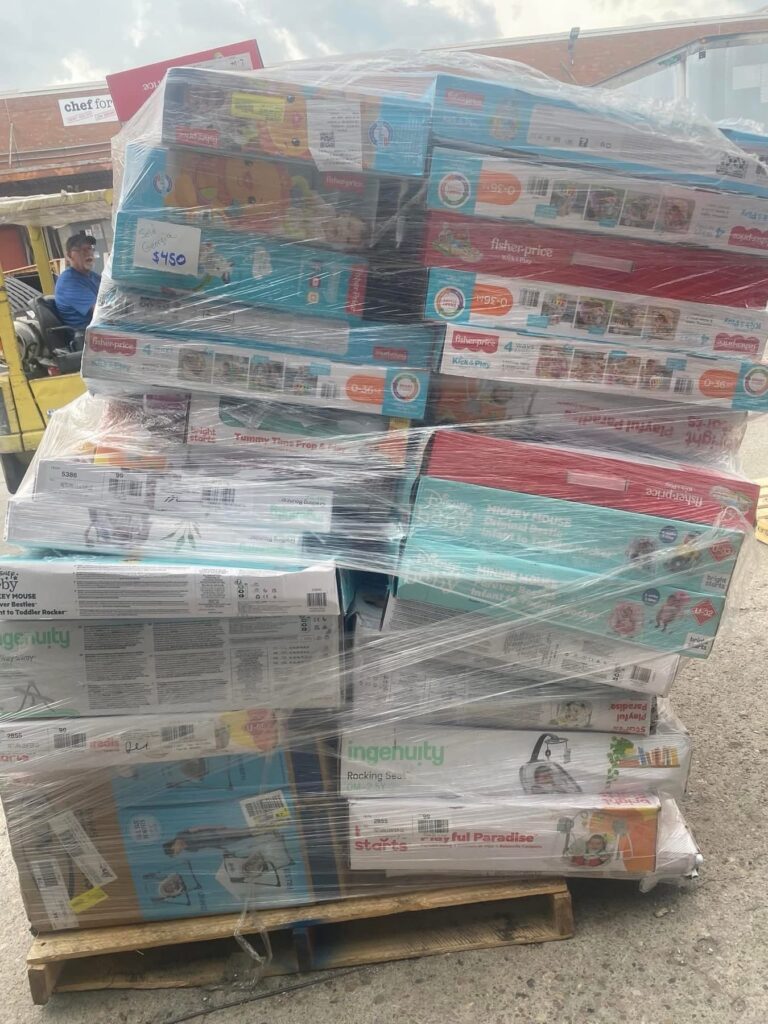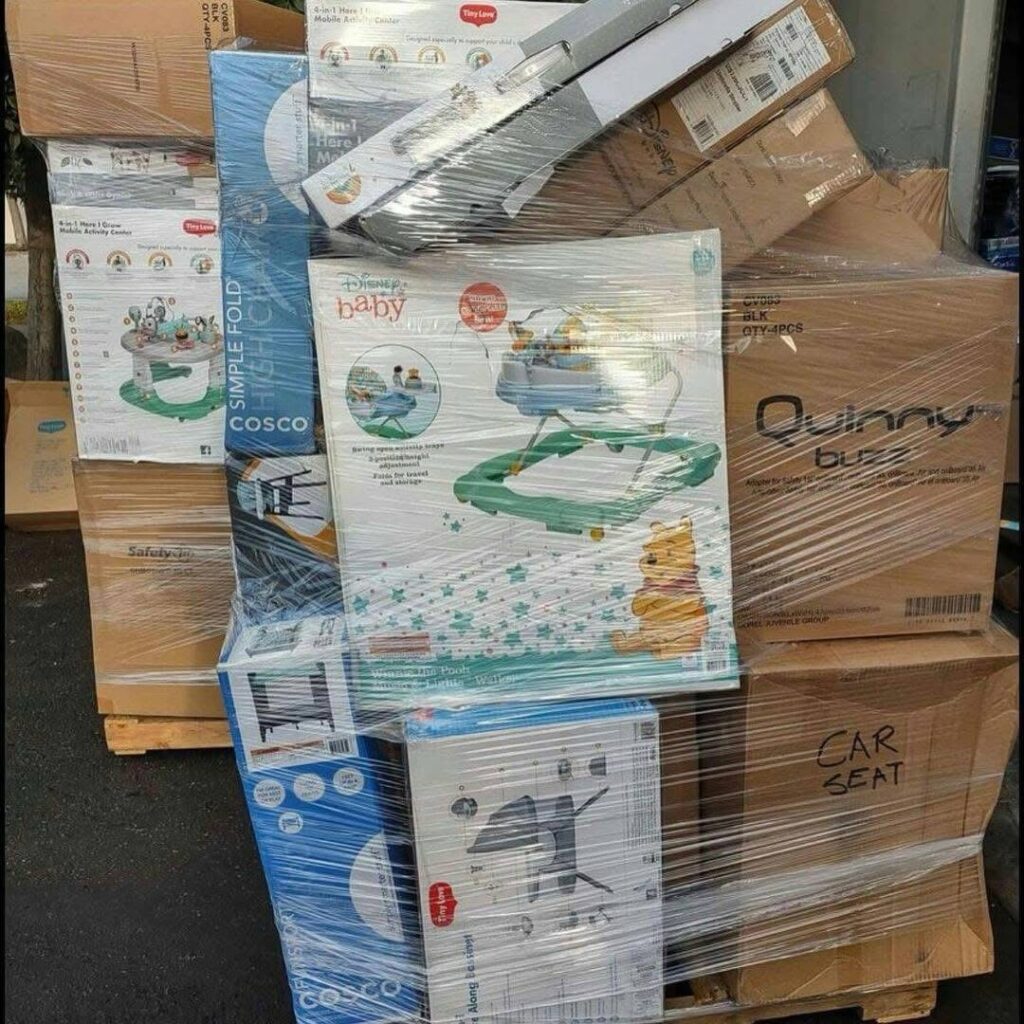

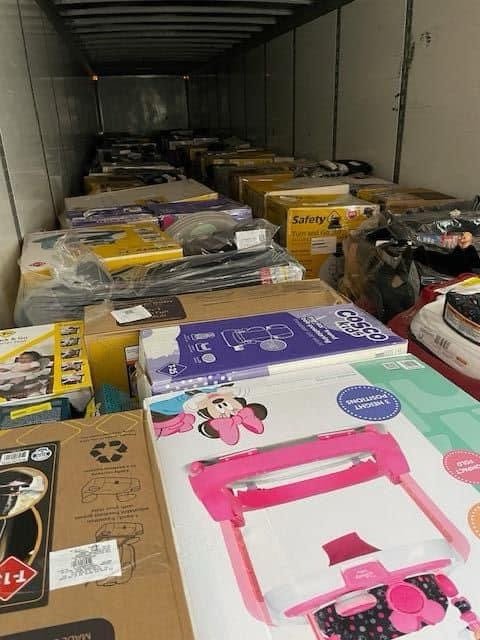
What Are Customer Return Pallets? They are bulk lots of products that shoppers have returned to retailers and online stores, then grouped into pallets and sold through wholesale or liquidation channels. The stock may include unwanted gifts, wrong-size purchases, damaged packaging, open-box goods, lightly used products, and items with faults or missing parts.
For UK resellers, customer return pallets UK can provide access to large amounts of stock at prices below normal retail value. These bulk inventory loads are commonly purchased by online sellers, discount retailers, market traders, and wholesale buyers looking for varied resale stock.. However, buying a return pallet is different from ordering new wholesale products from a standard distributor.
Condition can vary from one item to the next.
That is why successful pallet buyers focus on stock condition, manifests, freight costs, testing, and realistic resale values before making a purchase.
This guide explains how customer return pallets work, what may be inside them, the risks involved, and how UK resellers can assess a pallet before buying.
How Do Customer Return Pallets Work?
When a customer sends a product back to a retailer, the item enters a returns process.
The retailer or fulfilment operation may inspect the product and decide whether it can be returned to normal retail stock. Some products can be resold immediately. Others require testing, repackaging, refurbishment, or additional handling.
For large retailers processing significant volumes of goods, individually handling every returned item may not always be the preferred stock recovery route.
Instead, some returned merchandise enters secondary wholesale and liquidation channels. Buyers exploring liquidation pallets UK can access different stock types, including customer returns, overstock merchandise, shelf pulls, clearance inventory, and mixed retail goods.
The basic process may look like this:
- A customer returns a product.
- The retailer or returns centre receives the item.
- The stock is inspected, scanned, graded, or sorted.
- Products are grouped by category, condition, or supply programme.
- Goods are packed into pallets, cages, or larger loads.
- Wholesale buyers purchase the stock.
- Resellers inspect and prepare individual products for resale.
The exact process varies between retailers, suppliers, and liquidation programmes.
This is an important point for new buyers. Two pallets both described as “customer returns” may have very different product mixes and condition levels.
Why Are Customer Returns Sold by the Pallet?
Retail returns create a reverse logistics challenge.
Normal retail supply chains are designed to move products from suppliers to warehouses, shops, and customers. Returns move merchandise in the opposite direction.
Every returned product can create additional work.
A business may need to:
- Receive the item
- Scan the product
- Inspect its condition
- Test electronics
- Identify missing accessories
- Repackage the item
- Update inventory systems
- Find storage space
- Decide how the product should be resold
Selling returned stock in bulk allows merchandise to move into secondary resale channels.
This is where liquidation buyers, wholesalers, discount retailers, market traders, and online resellers enter the supply chain.
The size of the UK online retail market also helps explain why returns are an important stock category. Office for National Statistics data has regularly shown online sales accounting for a significant share of Great Britain’s retail sales. As online purchasing grows, the infrastructure needed to process unwanted and returned merchandise remains commercially important.
What Is Wholesale Liquidation?
What Is Wholesale Liquidation? In simple terms, wholesale liquidation is the bulk sale of stock that a retailer, wholesaler, distributor, or other stock holder wants to move out of its inventory.
Liquidation stock can come from several sources, including:
- Customer returns
- Excess inventory
- Retail clearance
- Shelf pulls
- End-of-line products
- Seasonal stock
- Business closures
- Packaging changes
- Cancelled orders
- Warehouse clearance
The products are usually sold in larger quantities rather than individually. Businesses searching for wholesale pallets UK often purchase this inventory by the pallet, multiple-pallet order, or larger wholesale load depending on their storage capacity and resale operation. How to start a liquidation pallet business in the UK . Retailers may also move end-of-line and seasonal merchandise through clearance pallets UK, giving wholesale buyers access to discounted stock from multiple product categories.
For example, a reseller may purchase one pallet containing hundreds of mixed household products instead of ordering ten units of a single product from a traditional wholesaler.
The lower purchase cost can create resale opportunities, but buyers also take on more inventory risk.
This risk-and-reward balance is central to the liquidation business.
What Can Be Inside Customer Return Pallets?
The contents depend heavily on the retailer, product category, and supplier.
Common categories include:
UK buyers can explore category-specific inventory such as electronics pallets UK, clothing pallets UK, shoe pallets UK, toy pallets UK, beauty pallets UK, and tool pallets UK. Category-focused pallets may be easier for specialist resellers because the inventory can be matched to an existing customer base or sales channel.
A mixed general merchandise pallet may contain products from several categories.
A category-specific pallet may focus on one type of inventory, such as tools, clothing, footwear, or household goods.
Example of a Mixed Customer Return Pallet
Imagine a reseller purchases a mixed home and electrical pallet.
The load may contain:
- Two air fryers
- Several kettles
- A coffee machine
- Bluetooth speakers
- Lamps
- Storage products
- Kitchen accessories
- A vacuum cleaner
- Small household gadgets
After inspection, the reseller may discover that some products are unused, several have damaged boxes, one appliance is missing an accessory, and two items need repair.
This is a realistic way to think about returned stock pallets.
Do not assume every item is new. At the same time, do not assume every return is broken.
Why Do Customers Return Products?
Products are returned for many reasons.
Common examples include:
- The customer ordered the wrong size.
- The product was no longer wanted.
- The buyer changed their mind.
- The packaging was damaged.
- An item arrived late.
- The colour looked different from expected.
- A customer received a gift they did not want.
- The product was difficult to use.
- Accessories were missing.
- The item had a cosmetic defect.
- The product developed a fault.
The reason for return can have a major impact on resale value.
A pair of shoes returned because of incorrect sizing may still be in excellent condition.
A power tool returned because the motor failed is a completely different resale proposition.
Experienced buyers never treat all customer returns as equal.
What Are Overstock Pallets?
What Are Overstock Pallets? Overstock pallets contain excess merchandise that a retailer or supplier no longer wants to keep in normal inventory.
Unlike customer returns, overstock products may never have been sold to an end customer.
Overstock can develop because of:
- Excess ordering
- Slow sales
- Seasonal changes
- Product range updates
- Warehouse space requirements
- Cancelled retail programmes
- Changes in consumer demand
Overstock pallets are often attractive to resellers because product condition may be more consistent.
However, overstock does not automatically mean every product is perfect.
Packaging may be marked, stock may be older, and seasonal products may have limited demand.
Customer Returns vs Overstock Pallets
The main difference is the stock history.
Customer returns have normally been sold and returned.
Overstock is generally excess inventory that remained within the supply chain.
For beginners, overstock may be easier to process.
For experienced operators with testing and repair systems, customer returns may offer stronger buying opportunities because of the additional condition risk built into the wholesale price.
Manifested vs Unmanifested Pallets
Understanding Manifested vs Unmanifested Pallets is one of the most important skills in liquidation buying.
What Is a Manifested Pallet?
A manifested pallet includes an inventory list.
Depending on the supplier, the manifest may show:
- Product name
- SKU or product code
- Quantity
- Original retail price
- Estimated retail value
- Category
- Condition information
A manifest helps buyers analyse the stock before ordering.
However, a manifest should not be treated as a guarantee of resale profit.
Retail value is not the same as current resale value.
A product with an original retail price of £100 may sell for only £45 on the secondary market.
What Is an Unmanifested Pallet?
An unmanifested pallet is sold without a detailed item-by-item inventory list.
The buyer may know the general category, source, pallet type, or approximate condition but not the exact contents.
Unmanifested stock can provide opportunities, but it carries greater uncertainty.
In practical terms, Manifested vs Unmanifested Pallets is a question of visibility and risk.
New buyers should usually prioritise stock they can analyse.
Experienced resellers may be better equipped to handle unmanifested inventory because they already have testing procedures, multiple sales channels, and ways to recover value from slower or damaged goods.
Are Customer Return Pallets Profitable?
They can be profitable, but profit is never automatic.
A pallet’s profitability depends on:
- Purchase price
- Product condition
- Actual resale demand
- Delivery costs
- Testing expenses
- Repair costs
- Marketplace fees
- Storage
- Labour
- Unsellable inventory
One of the biggest mistakes new buyers make is calculating profit from estimated retail value alone.
Suppose a pallet has an estimated original retail value of £8,000.
That does not mean the reseller will generate £8,000 in sales.
Some items may be damaged. Others may sell below retail price. Marketplace fees, delivery costs, refunds, and labour can reduce the final margin.
A Better Way to Estimate Pallet Value
Use conservative resale values.
For each high-value product, research completed or sold prices where possible.
Then separate stock into four practical groups:
- Grade A: New or near-new
- Grade B: Working with cosmetic wear or damaged packaging
- Grade C: Incomplete, damaged, or requiring repair
- Salvage: Suitable mainly for parts or recycling
The exact grading terminology varies between suppliers, so always read the seller’s own condition definitions.
How to Buy Customer Return Pallets More Safely
Before purchasing customer return pallets UK resellers should carry out basic due diligence.
1. Research the Supplier
Check whether the business provides clear contact information, stock descriptions, delivery terms, and condition details.
Be cautious of sellers making guaranteed profit claims.
No legitimate liquidation supplier can guarantee exactly how much money an independent reseller will make from mixed-condition stock.
2. Understand the Stock Condition
Ask whether the pallet contains:
- Raw customer returns
- Tested returns
- Untested stock
- Refurbished goods
- Shelf pulls
- Overstock
- Mixed-condition merchandise
The phrase “return pallet” alone is not enough information.
3. Check the Manifest
If a manifest is available, analyse it carefully.
Do not simply total the listed retail prices.
Check current resale demand and realistic selling prices.
4. Calculate Delivery Costs
Freight can change the economics of a pallet.
A £500 pallet with £250 delivery has a £750 landed cost before testing, storage, or selling fees.
Always calculate the landed cost.
5. Plan Your Resale Channels
Know where you intend to sell before purchasing.
Possible UK resale channels include:
- eBay
- Amazon, where category and seller rules allow
- Facebook Marketplace
- Vinted for suitable products
- Local markets
- Discount shops
- Warehouse sales
- Your own ecommerce website
Different products perform better through different sales channels.
Practical Strategy for Processing a Return Pallet
When a pallet arrives, avoid listing products immediately.
Use a clear processing system.
Step 1: Photograph the Pallet
Take photographs before and during unpacking.
This creates a record of the delivery and helps with internal inventory control.
Step 2: Sort by Product Category
Separate electronics, clothing, home goods, tools, and accessories.
Step 3: Inspect Every Item
Check packaging, accessories, model numbers, and visible damage.
Step 4: Test Products Safely
Electrical products should be assessed appropriately before resale. UK sellers must take product safety seriously and understand their responsibilities when supplying goods to consumers.
Step 5: Record Your Inventory
Use a spreadsheet or inventory management system.
Record:
- Product
- Condition
- Cost allocation
- Testing result
- Listing price
- Selling platform
- Final sale price
Step 6: Choose the Correct Sales Channel
High-value branded products may perform better through detailed online listings.
Low-value mixed goods may sell faster in bundles, local markets, or discount retail environments.
Expert View: The Pallet Is Only the Starting Point
In practical liquidation resale, buying stock is often the easiest part.
The real work begins when the pallet reaches the warehouse.
A skilled reseller creates value through:
- Accurate testing
- Cleaning
- Sorting
- Product research
- Good photographs
- Honest descriptions
- Competitive pricing
- Fast inventory turnover
Consider two buyers purchasing similar wholesale return pallets.
Buyer A leaves the products mixed in a warehouse and lists only the obvious high-value items.
Buyer B tests every product, identifies missing accessories, creates bundles, sells repairable goods accurately, and tracks margins by category.
Buyer B has a stronger chance of recovering more value from the same type of inventory.
The difference is not simply the pallet.
The difference is the resale system.
Common Mistakes New Pallet Buyers Make
Avoid these common errors:
- Buying based only on estimated retail value
- Assuming every customer return works
- Ignoring delivery charges
- Purchasing products without knowing the market
- Failing to test electrical goods
- Using only one resale platform
- Overpaying for “mystery” inventory
- Keeping slow stock for too long
- Failing to track actual profit
- Buying larger quantities before testing the supplier
A sensible approach is to start with a manageable quantity, measure the results, and scale based on real sales data.
Conclusion: What Are Customer Return Pallets?
So, What Are Customer Return Pallets? They are bulk lots of merchandise returned by customers and later sold through wholesale or liquidation supply channels. The products may range from unused open-box goods to incomplete, damaged, or faulty inventory.
For UK resellers, customer returns can create profitable sourcing opportunities when purchased carefully. The key is to understand condition, compare manifested and unmanifested stock, calculate landed costs, research resale prices, and build a reliable testing and inventory process.
Whether you are comparing customer returns with overstock or learning What Is Wholesale Liquidation?, remember one principle: profit comes from informed buying and efficient resale operations, not from the original retail value printed on a manifest.
Before buying customer return pallets UK, research the supplier, understand the stock type, and calculate your numbers conservatively. A disciplined approach gives you a much stronger foundation for building a sustainable liquidation resale business. If you’re looking to build a strong resale business, understanding the most profitable items to resell from pallets is the fastest way to avoid losses and start making consistent profit. Liquidation pallets can be extremely profitable when you know exactly which products sell quickly and at high margins.
1. What are customer return pallets?
Customer return pallets are bulk lots of products that shoppers have returned to retailers or online stores. The merchandise is grouped into pallets and sold through wholesale or liquidation channels.
2. Are customer return pallets full of broken items?
No. Condition varies. A pallet may include unused products, open-box goods, items with damaged packaging, lightly used merchandise, incomplete products, and faulty stock.
3. What is the difference between customer returns and overstock pallets?
Customer returns have usually been sold and returned by shoppers. Overstock pallets generally contain excess inventory that remained unsold within the retail or wholesale supply chain.
4. Are manifested pallets better than unmanifested pallets?
Manifested pallets provide more inventory information and can be easier to analyse before buying. Unmanifested pallets provide less visibility and may carry greater risk. The better option depends on the buyer’s experience and resale system.
5. Can you make money reselling customer return pallets in the UK?
Yes, customer return pallets can provide resale opportunities, but profit is not guaranteed. Results depend on purchase price, condition, freight costs, testing, repair expenses, resale demand, selling fees, and inventory management.